Life Short Tales Moral Stories

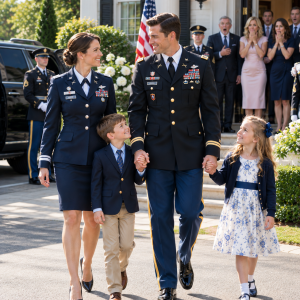
On My Wedding Morning, My Sister Laughed At The Four Silver Stars On My Shoulders And Called My Marine Corps Uniform A Costume. Thirty Minutes Later, Four Hundred Marines Rose To Their Feet As One Voice Echoed Through The Chapel: “GENERAL ON DECK!” That Was The Moment My Family Realized The Woman They Had Mocked Was The One Everyone Else Respected.

Part 1: The Uniform They Called A Costume

The morning of my wedding, my younger sister stood inside the bridal room at Marine Corps Base Camp Lejeune and laughed at the four silver stars resting on my shoulders.

Her laughter was not nervous, affectionate, or surprised. It was sharp enough to reduce thirty-two years of service into something ridiculous.

“You actually plan to walk down the aisle dressed like that?” she asked. “You look like you are reporting for inspection, not marrying a man.”

My name is General Katherine Monroe, and at fifty-two I had commanded expeditionary forces, directed humanitarian operations across three continents, and briefed presidents without allowing fear to enter my voice. Yet while standing before a tall mirror in my blue Marine Corps dress uniform, I felt my hands tremble as though I were once again the awkward teenager my family had spent years correcting.

Across the room hung the ivory designer gown my mother had delivered two weeks earlier. It remained sealed beneath clear plastic, accompanied by no card, no phone call, and no acknowledgment that I had already chosen what I intended to wear.

My mother, Diane Monroe, believed the gown would make me look softer. My father believed it would prevent uncomfortable questions from relatives. My sister, Lillian, believed it would hide the life that made her feel small whenever strangers recognized me.

I believed a wedding garment should reflect the woman making the vows.

The dark blue jacket fit perfectly across my shoulders. Beneath the stars rested rows of ribbons, service decorations, and the insignia of a career built through discipline rather than family approval. I had not selected the uniform to create a spectacle. I chose it because every important version of myself had lived inside it: the frightened lieutenant, the grieving commander, the exhausted officer writing letters to families, and the woman who eventually learned that leadership required tenderness as much as authority.

At 9:06 that morning, my phone illuminated beside the makeup brushes.

The first message came from Lillian.

“Please tell me you are not wearing that military costume in front of everyone.”

A second message appeared before I responded.

“Matthew deserves a bride, not a recruitment poster.”

Then the final sentence arrived.

“Do not embarrass us in front of people who actually matter.”

I looked at the screen until it dimmed.

People who actually mattered.

Lillian had always wrapped cruelty inside elegant language, as though good grammar transformed contempt into concern.

A knock sounded against the door, but Lillian opened it without waiting. She entered wearing a champagne-colored silk gown, followed by my mother in pale lavender and my father, Douglas Monroe, in a dark suit that seemed to carry the weight of every conversation he had avoided throughout his life.

Lillian studied me from polished shoes to silver stars.

Then she laughed again.

“This is worse than I imagined.”

“Good morning to you too,” I replied.

She crossed both arms.

“Could you not behave like a normal woman for one day?”

My mother looked toward the untouched wedding gown.

“Katherine, there is still time. The dress was made specifically for you.”

“So was this uniform.”

Lillian smiled with open satisfaction.

“No, that was made for a soldier. Matthew is marrying a wife, unless he has changed his mind.”

My father sighed.

“Why must every event become another statement about your career?”

For one painful moment, I was no longer a general. I was seventeen again, standing in our kitchen while my family described ambition as aggression, confidence as arrogance, and discipline as a masculine defect.

I straightened my shoulders.

“I am not wearing this uniform to make a statement about my career. I am wearing it because service is part of who I am, and I refuse to enter marriage disguised as someone more comfortable for you.”

Lillian rolled her eyes.

“You always make yourself sound heroic.”

A young Marine appeared in the doorway before I answered. His posture was formal, and his voice carried the careful respect of someone fulfilling an assigned honor.

“General Monroe, the chapel is ready for your entrance.”

I walked past my family without another word.

The chapel doors opened slowly.

Morning light poured through stained glass and spread across the stone aisle. Nearly four hundred Marines filled the pews, including active-duty officers, retired commanders, enlisted personnel, military families, and veterans who had served beside me during the most difficult years of my career.

Every face turned toward the doorway.

Then one command rang through the chapel.

“GENERAL ON DECK!”

Four hundred Marines rose in perfect unison.

The sound of movement was not loud, yet it filled the entire sanctuary with disciplined power. Their attention settled upon me without mockery, embarrassment, or qualification.

Lillian’s expression emptied.

My mother pressed one hand against her pearls. My father looked across the chapel with the stunned realization that hundreds of respected people were honoring the daughter he had spent decades treating as excessive.

At the altar, Matthew Reynolds waited in a charcoal suit. His eyes were already wet, and pride shone openly across his face.

He had never once asked me to become smaller.

Before I could take another step, an elderly man entered the aisle from the front pew carrying a sealed leather portfolio.

My full name appeared across its cover.

General Katherine Elise Monroe.

He lifted it carefully and addressed me.

“General, I was instructed to place this in your hands before you married.”

Part 2: The Man Who Knew My Grandfather

The entire chapel remained standing while the stranger approached.

He looked nearly eighty, with white hair, a narrow silver beard, and the upright bearing of someone whose body had remembered military discipline long after leaving service. He wore no uniform, but a small Marine Corps pin rested on his lapel.

Matthew descended one step from the altar.

Recognition crossed his face.

He knew this man.

That frightened me more than the unexpected interruption.

“Who are you?” I asked.

The man stopped before me.

“My name is Colonel Arthur Brennan, retired. I served under your grandfather, General James Monroe.”

My grandfather had died eight months before I was born. To me, he had always been a faded photograph above my father’s desk, a folded flag inside a walnut case, and a family subject that disappeared whenever I asked too many questions.

My father described him only as difficult.

My mother said he valued duty more than family.

Lillian dismissed him as another military obsession.

Arthur Brennan held the portfolio with both hands.

“General Monroe asked me to protect these documents until the day your family gathered publicly to recognize the woman you became.”

“Why today?”

“Because he specifically named your wedding day.”

I looked toward my parents.

My mother’s face had become pale, while my father stared at Arthur as though an old accusation had stepped out of history.

Lillian recovered first.

“This is absurd. Katherine has already arranged enough military theater for one morning.”

Nobody laughed.

Arthur turned toward her.

“Your grandfather anticipated that response more accurately than you might appreciate.”

The silence that followed carried more force than an argument.

Matthew came to stand beside me.

“You do not have to open it now,” he said quietly.

His words did not contain pressure. He was offering me an exit, not choosing for me.

I touched the red wax seal.

“Did you know about this?”

“Only that Colonel Brennan requested access to the ceremony. I did not know what he intended to deliver.”

I believed him.

That certainty steadied me.

I broke the seal.

Inside rested several legal documents, an old photograph, and a handwritten letter folded beneath a sheet of military stationery.

The first line was addressed to me.

Katherine, if this letter has reached you, then you are standing in a room where people have finally gathered to honor the life they once tried to make you question.

My vision blurred for several seconds.

I had never met the man whose handwriting filled the page, yet his words seemed to reach directly into the loneliest part of my childhood.

I continued reading silently until Arthur asked whether the family should hear it.

I looked at my father.

“Did you know this letter existed?”

He shook his head too quickly.

The fear in his eyes suggested that he knew something connected to it.

I read aloud.

“Katherine, I do not know whether I will live long enough to meet you, but I know enough about the family into which you will be born to fear that strength in a daughter may be mistaken for disobedience.”

My mother closed her eyes.

The letter continued.

“The women in our family have never been fragile. Your great-grandmother crossed an ocean alone. Your grandmother managed a farm, raised three children, and kept my name from becoming more important than my character. If you are told that femininity requires silence, remember that silence is often demanded by people who benefit from your absence.”

The chapel remained completely still.

“If you choose service, stand upright. If you choose marriage, stand upright. If you choose both, do not apologize for requiring enough room to hold both lives.”

My hands began trembling again, but this time the emotion was not humiliation.

It was recognition.

A dead man had seen what my living family refused to acknowledge.

I reached the final paragraph.

“The documents attached explain the educational trust established in your name, the reasons your father was never given full control of it, and the instructions for Colonel Brennan if anyone attempts to shame you publicly for becoming the woman I believed you could become.”

My father lowered himself into the nearest pew.

Lillian stared at him.

“What trust?”

Arthur’s expression tightened.

“That discussion should probably continue after the ceremony.”

Matthew placed one hand lightly against my back.

“Whatever you decide, I am beside you.”

I folded the letter.

Then I turned toward the Marines still standing throughout the chapel.

“Seats.”

Four hundred people sat in disciplined unison.

I faced my family.

“The wedding will continue. Afterward, we are going to discuss every page inside this portfolio.”

My mother looked downward. Lillian’s face remained rigid. My father gave one small nod.

It was not an apology.

However, it was the first acknowledgment that I had the right to demand answers.

I handed the portfolio back to Arthur for safekeeping and continued down the aisle.

Matthew met me at the altar.

“You are magnificent,” he whispered.

“Even in my costume?”

His mouth curved into a restrained smile.

“Especially in the uniform you earned.”

Part 3: The Vows That Required No Disguise

The ceremony began without pretending the interruption had not happened. The portfolio remained with Arthur in the front row, while the knowledge of its contents rested beneath every word spoken near the altar.

Matthew had spent twenty years as a trauma surgeon for military and civilian hospitals. He understood service without romanticizing it. He had seen the aftermath of decisions people like me made and never treated courage as something clean or decorative.

His vows were simple.

“I promise to stand beside you in rooms where others applaud and rooms where nobody understands. I will tell you the truth gently whenever possible and bravely whenever necessary. I will never ask you to become smaller so I may feel larger.”

My throat tightened.

When my turn came, I held both of his hands.

“I have spent most of my life learning how to remain standing. Beside you, I learned that rest does not require surrender. You have never asked me to conceal the parts of myself that frightened other people, and I promise to offer you the same freedom.”

The minister pronounced us married.

When Matthew kissed me, applause moved gradually through the chapel until every person was standing once again. It was not revenge against my family, and it was not a celebration of rank.

It was witness.

For the first time that morning, I allowed myself to smile without restraint.

The reception took place inside a historic officers’ hall overlooking rows of Carolina pines. Brass details reflected the afternoon sun, white linens covered long tables, and conversations moved warmly beneath military photographs gathered from generations of service.

For nearly an hour, I permitted myself to be only a bride.

I danced with Matthew, greeted friends, laughed with former aides, and accepted embraces from people who had known me before the stars appeared.

Still, the portfolio waited.

Arthur sat near a side window with it beside his hand.

Matthew noticed my attention drifting.

“Are you ready?”

“No.”

He kissed my temple.

“Then we can be unready together.”

We gathered inside a quiet conference room adjacent to the reception hall. Arthur joined us, followed by my parents and Lillian.

My sister entered without invitation, carrying her resentment like another accessory.

Arthur placed the portfolio on the table.

“General James Monroe was my commander, mentor, and friend. He could be stubborn, proud, and emotionally difficult, but he loved his family with greater seriousness than he knew how to express.”

My father stared at the table.

“He never said that.”

“Your father often failed to say the most important things while people could still answer him.”

My father flinched.

Arthur removed a trust document.

“Before his death, General Monroe established an educational and independence fund for Katherine. It was intended to support university study, military education, public service, housing, and any professional path that enabled her to build a life without financial dependence.”

Lillian leaned forward.

“How much money?”

Arthur ignored her question.

“The fund should have transferred to Katherine when she entered officer training at twenty-one.”

I looked at him.

“Should have?”

“The disbursement was stopped after the trust administrator received a letter stating that you declined the benefit and requested that the money cover broader family obligations.”

My father looked genuinely confused.

“I never wrote such a letter.”

Arthur turned toward my mother.

The room changed.

My mother pressed both hands together.

“Diane?” my father asked.

She looked toward me but could not maintain eye contact.

“We were in serious financial trouble,” she said. “Your father’s medical bills were overwhelming, the mortgage was behind, and Lillian had already enrolled at a private college.”

“You redirected my trust?”

Tears appeared in her eyes.

“I believed you would manage without it. You had scholarships, military benefits, and a clear future.”

The words settled heavily between us.

“You did not believe I required less help,” I said. “You believed I would survive being denied it.”

My mother covered her mouth.

My father turned toward her with visible disbelief.

“You used my signature?”

“You were recovering from surgery and signed several forms together.”

“You told me they concerned refinancing.”

Lillian pushed back her chair.

“This is being exaggerated. Katherine became a general, so obviously she did not need the money.”

Matthew’s expression hardened, but I placed one hand over his before he answered.

I faced my sister.

“The outcome does not legalize the theft.”

“It was not theft. It supported the family.”

Arthur spoke with quiet precision.

“The documents were altered, the beneficiary’s wishes were falsely represented, and the funds were distributed contrary to the trust terms. Legally, it was misappropriation.”

Lillian’s face reddened.

“Why does Katherine always receive another reward for being a soldier?”

“The trust was created before she chose the Marines,” Arthur replied. “It was protection, not a prize.”

My father looked at me.

His voice was unsteady.

“I did not know, Katherine.”

I believed him, yet ignorance did not erase everything else.

“You knew they mocked me. You knew Mother treated Lillian’s needs as emergencies and mine as inconveniences.”

He closed his eyes.

“I knew enough to intervene, and I refused because conflict exhausted me.”

When he looked at me again, the tired expression I had known since childhood was gone.

“That was cowardice, not peace. You deserved a father who understood the difference earlier.”

The apology did not repair decades.

However, it named the wound accurately.

That mattered.

Part 4: The Sister Who Finally Said The Quiet Part Aloud

Arthur removed additional statements showing where the trust money had gone. Portions covered medical debt and mortgage payments. A significant amount paid Lillian’s tuition, living expenses, wedding deposit from a failed engagement, and the launch of a boutique business she later described as entirely self-made.

Lillian read the numbers with growing anger.

“Why are you showing this as though I stole anything?”

“You may not have known the source initially,” Arthur said, “but correspondence indicates that you learned about the trust several years later.”

He placed printed emails on the table.

One message from Lillian to my mother read:

Do not tell Katherine. She already has rank, attention, and benefits. This is the only thing that belongs to me.

My sister became silent.

The message injured me more than the bridal-room mockery because it proved her contempt was not spontaneous. It had been cultivated through years of benefiting from my exclusion.

“You knew,” I said.

“I was twenty-four and terrified that everything would collapse.”

“You were old enough to understand that the money was not yours.”

Her jaw tightened.

“You always had everything.”

I almost laughed.

“What exactly did I have?”

“Everyone admired you. Teachers, recruiters, officers, strangers at family gatherings. You entered rooms and people paid attention.”

“That attention came with work you never saw.”

“That is exactly what you always say.”

I studied her carefully.

“Why did the uniform bother you so much this morning?”

“Because it was inappropriate.”

“That is your rehearsed answer. Tell me the honest one.”

Her face shifted.

For several seconds, I expected another insult.

Instead, the truth escaped.

“Because everyone stands when you enter.”

The room became silent.

Lillian’s voice shook as she continued.

“You left, became important, returned with medals, and made our entire family look ordinary. Mother worried about you. Dad became silent around you. Everyone asked me what it felt like to be your sister, but nobody asked what my own life was becoming.”

My anger softened around its edges without disappearing.

“I never asked anyone to stop seeing you.”

“You did not have to. You became impossible to compete with.”

“I was never competing.”

Her eyes filled with tears.

“That made it worse.”

My mother began crying again, but this time I did not redirect the conversation to comfort her.

“Lillian, I was not untouchable. Everyone simply stopped reaching toward me because my strength was more convenient than my needs.”

My sister looked away.

Arthur removed another handwritten note from my grandfather.

“There is a recommendation attached to the trust.”

The note addressed me directly.

Katherine, if you marry someone who stands proudly beside the life you earned, then perhaps you have found love without disguise. Use the fund to build something beyond the harm. Consider supporting young people whose families mistake vocation for rebellion.

The suggestion entered my mind with immediate clarity.

A scholarship for first-generation military students, public servants, emergency workers, and young adults whose families refused to support their chosen paths.

Matthew read the note over my shoulder.

“You should create it.”

I looked at him.

“I want to.”

Arthur smiled.

“Your grandfather expected that possibility.”

My mother wiped her face.

“I do not know how to repair what I did.”

For the first time, her words sounded like a question rather than a performance.

“Begin with the complete truth,” I said. “No softened language, no claim that survival made the theft harmless, and no demand that I forgive you before you accept responsibility.”

She nodded.

My father placed one hand beside hers without covering it.

Lillian remained rigid, yet the hostility had begun cracking around something more honest.

Arthur reached into the portfolio again.

“There is one final envelope. General Monroe instructed me to open it only if Katherine wore her uniform to the wedding and the family attempted to shame her publicly.”

My mother stood abruptly.

“Arthur, that is unnecessary.”

His expression became grave.

“Diane, the conditions have been met.”

The envelope carried five handwritten words.

For the daughter Diane raised second.

Lillian reached for it.

My mother whispered:

“Please do not open that here.”

Lillian broke the seal anyway.

She read the first page, and every trace of color disappeared from her face.

Then she looked at me with fear rather than envy.

“Katherine,” she whispered, “this says we are not biological sisters.”

Part 5: The Daughter My Mother Never Expected To Lose

My mother lowered herself into the nearest chair.

My father remained standing, although his expression suggested he could no longer feel the floor.

Lillian read the letter aloud in fragments.

General Monroe had discovered that Diane became pregnant during a separation early in my parents’ marriage. The child’s biological father was a man named Richard Bellamy, a married physician who disappeared from her life before Lillian’s birth.

My grandfather agreed to keep the truth confidential because my father chose to raise the child as his own. However, he feared secrecy would eventually become another tool for unequal treatment.

His letter did not question Lillian’s place in the family.

It questioned the way guilt had shaped every decision around her.

Douglas may love the child completely, yet Diane may spend years compensating for the secret by making Lillian’s needs sacred and Katherine’s needs negotiable. If that occurs, secrecy will injure both daughters differently.

My mother sobbed.

My father sat slowly beside her.

“Did you know he knew?”

She shook her head.

“I believed nobody knew except Richard and me.”

Lillian looked devastated.

“Does my father know?”

My father answered before Mother could.

“I have always known enough to suspect, but I chose you completely from the day you were born.”

Lillian’s face collapsed.

“Then why did nobody tell me?”

“Because I thought love required preserving the story your mother wanted,” he said. “I understand now that love without truth created a debt everyone else was forced to pay.”

For the first time, my sister looked at me without rivalry.

“Mother gave me your money because she was afraid I would discover I did not belong.”

My mother shook her head desperately.

“You belonged. You always belonged.”

“Then why did belonging require taking from Katherine?”

Nobody answered.

The question exposed the entire structure of our family. My strength had become the resource everyone spent because Lillian’s fragility protected an older secret.

I looked at my sister.

“None of this changes that we grew up as sisters.”

Tears ran down her face.

“I treated you terribly.”

“Yes, you did.”

I did not soften it.

“I believed your success proved there was less room for me.”

“There was always room. Our parents simply taught us that support was scarce and affection had to be distributed according to who seemed most breakable.”

Lillian covered her eyes.

The reception music continued beyond the wall, reminding us that my wedding remained in progress while our family history was being dismantled.

I closed the portfolio.

“We cannot resolve this today.”

My mother looked at me fearfully.

“Are you leaving us?”

“I am setting conditions for any future relationship. Legal accountability regarding the trust will continue. Family counseling will be necessary. Lillian must decide whether she wants truth or continued resentment. Father must stop hiding behind exhaustion. You must stop calling theft sacrifice.”

My mother nodded through tears.

I turned toward Arthur.

“Please begin the process of restoring the fund and documenting every unauthorized distribution.”

“I already have the required filings prepared.”

Of course he did.

Old Marines understood the importance of preparation.

Part 6: The Legacy I Chose To Build

The trust dispute lasted nearly a year. My mother cooperated after initially resisting legal terminology that made her actions sound criminal. Lillian sold part of her business and agreed to a repayment arrangement. My father accepted responsibility for signing documents without reading them and entered counseling with my mother.

None of them transformed quickly.

Real accountability rarely arrives with dramatic music.

My mother apologized repeatedly before learning how to apologize without explaining herself. My father began calling regularly and asking questions rather than offering tired observations. Lillian remained defensive for several months, then entered individual therapy after meeting Richard Bellamy once and discovering that biological truth did not provide the identity she expected.

She later told me:

“I spent my life believing I had to be more beautiful, more loved, or more protected than you because some part of Mother always feared I could be removed.”

“You were never removable.”

“I know that now, but I built my personality around proving otherwise.”

We did not become inseparable sisters.

We became honest ones.

Using the restored trust and additional private donations, Matthew and I established the Standing Forward Scholarship. It supported young adults entering military service, medicine, public safety, engineering, and government work despite resistance from their families.

Applicants were not required to describe trauma. They were asked one question:

“What calling would you pursue if you no longer had to apologize for becoming yourself?”

The answers arrived from every state.

A young woman from Kentucky wanted to become a naval engineer despite relatives who believed technical work made her unfeminine. A young man from New Mexico wanted to train as a nurse after being mocked for choosing a caring profession. A first-generation college student from Detroit wanted to enter emergency management after surviving a neighborhood flood.

Every application reminded me that my grandfather’s money could become more valuable after leaving our family conflict behind.

Matthew attended every scholarship ceremony without treating the project as evidence of his goodness. He stood beside me because partnership had always been his quiet language.

On our second anniversary, Arthur presented the first recipient with a framed copy of General Monroe’s sentence:

If you choose service, stand upright.

Arthur died the following winter.

At his memorial, Marines from several generations stood together while I delivered the eulogy. I thanked him for preserving the portfolio, but more importantly, for waiting until I possessed enough authority over my own life to decide what the truth should build.

Part 7: The Woman Who No Longer Needed Permission

Five years after the wedding, the original ivory gown remained stored in my mother’s attic. She once asked whether I wanted to donate it.

“You may decide what happens to it,” I answered. “It was always your idea of who I should become.”

The uniform from my wedding remained inside a protective case beside Matthew’s suit. Our favorite photograph showed us leaving the chapel beneath crossed ceremonial swords while sunlight touched the silver stars on my shoulders.

My family appeared in the background.

My father looked proud.

My mother looked uncertain.

Lillian looked directly at me rather than at the camera.

That image represented more truth than a perfect portrait ever could.

During the scholarship’s fifth anniversary ceremony, a young Marine officer approached me after receiving her award.

“My sister said I would never find anyone who wanted a woman stronger than he was,” she told me.

Matthew stood nearby speaking with her parents.

I looked at the officer.

“The correct person will not measure love by deciding which of you is permitted to appear powerful.”

She smiled.

“Did your family eventually understand that?”

I considered the question carefully.

“They learned parts of it. More importantly, I stopped waiting for their understanding before living accordingly.”

That distinction became the final lesson my grandfather’s letter gave me.

Recognition from others can heal something, but self-respect cannot depend entirely upon its arrival.

My father’s apology mattered. My mother’s accountability mattered. Lillian’s honesty mattered. None of them created my worth retroactively.

They only stopped denying what had existed all along.

On quiet evenings, Matthew and I sometimes reread the original letter. The paper had softened at the folds, while the ink remained dark and deliberate.

A dead grandfather had trusted a granddaughter he never met.

A retired colonel had guarded that trust for decades.

A husband had stood beside me without stepping in front.

Four hundred Marines had risen because rank required it, but many remained standing because shared service had taught them who I was.

My family had once believed the uniform made me difficult to love.

The uniform never created that difficulty.

It merely made it impossible for them to continue pretending I had become nothing.

I walked into the chapel carrying every version of myself they had tried to correct. I walked out married to a man who required no disguise.

The letters exposed the stolen trust, the hidden paternity, and the fear that shaped two daughters into rivals. However, the greatest revelation was quieter.

There had never been too much of me.

There had only been people who needed me smaller so their own choices would remain comfortable.

I no longer make myself smaller.

Not for peace.

Not for approval.

Not even for family.

THE END

Related Posts

The Day My Doctor Told Me My Heart Was Failing, I Didn’t Call the Son Who Hadn’t Spoken to Me in Eight Years Because He Believed I Had Driven His Father Away—I Wrote Him Fifty-Two Letters Instead… Hoping That Long After My Heart Stopped, My Love Might Finally Find Its Way Back to Him.

The Diagnosis She Took Home Alone “Mrs. Sullivan, you need to call your family.” Margaret Sullivan stared at the cardiologist across the polished desk. Outside the window, October...

My Mother-In-Law Called Me Manipulative, Ungrateful, And Temporary. For Three Years, My Husband Said Nothing. Then He Looked At Her Across Our Honeymoon Breakfast Table And Said, “Caroline Never Asked Me To Choose Between Her And You. She Asked Me To Stand Beside My Wife.”

Part 1: The Door She Locked Between Us On the first night of my honeymoon, my mother-in-law locked me inside the smaller connecting room and climbed into the...

After Five Years Away, a Soldier Returned Home and Found His Mother Scrubbing the Floor of the House She Had Built—Then His Wife Calmly Said, “Legally, It Belongs to Us,” Never Realizing One Fake Mortgage, Forged Documents, and a Single Phone Call Would Destroy the Life She Had Carefully Planned

The Soldier Who Came Home to a House That No Longer Felt Like Home The Homecoming Ruth Had Imagined for Five Years For five long years, Captain Elias...

11 Minutes Into Our Divorce Hearing, My Attorney Husband Used Papers I Signed After My Father’s Funeral to Take My $13 Million Company—He Smiled Until One Sealed Envelope Exposed the Secret He, My Mother, and My Sister Thought I’d Never Discover

The Smile Across the Courtroom Eleven minutes into my divorce hearing, my husband leaned back in his chair and smiled at me as though my entire life had...

For Four Years, I Hid My Son From The Most Dangerous Man I Had Ever Loved. Then We Met Him At A Farmers’ Market, And My Little Boy Looked Between Us Before Asking, “Mommy, Why Does He Look Like Me?” Seconds Later, The Man’s Security Team Warned Him That Someone Else Already Knew About The Child.

Part 1: The Question That Destroyed Four Years Of Secrecy For four years, I believed I had escaped the most dangerous man I had ever loved, but one...

Để lại một bình luận

Email của bạn sẽ không được hiển thị công khai. Các trường bắt buộc được đánh dấu *