Part 1: The Daughter Who Always Managed Alone
I was lying beneath surgical lights when I called my mother for the fourth time. My right hand shook so badly that the nurse beside me leaned down and steadied my wrist, while stainless-steel instruments clicked against trays beyond the blue surgical curtain.
The call went directly to voicemail.
“Hello, you have reached Linda. Please leave your message after the tone.”
I disconnected before the recording began because there was nothing left to explain. My blood pressure had climbed dangerously, my unborn daughter’s heart rate had dropped, and the surgeon had decided that waiting any longer was no longer medically responsible.
My husband, Aaron, was still on an airplane returning from a business meeting in Dallas. Nobody related to me by blood was present inside Denver University Hospital, although both my parents were less than two hours away.
Eleven hours earlier, I still believed I understood my place within our family. By the following morning, I would begin recovering the $47,000 my parents had borrowed from us to protect their home, and I would never regret making that decision.
My name is Natalie Brooks, and at thirty-one, I was the older daughter in a family of two girls. My parents raised my younger sister, Paige, and me inside a modest two-story house in Lakewood, Colorado.
From the street, our family resembled every stable middle-class household nearby. Our lawn remained trimmed, seasonal decorations appeared beside the mailbox, and my parents smiled together in photographs displayed throughout the living room.
Behind those appearances, affection followed rules nobody openly acknowledged. Paige received attention naturally, while I received responsibility because everyone considered me dependable.
The imbalance rarely appeared dramatic enough to justify confrontation. My excellent grades earned approving nods, while Paige’s average results produced celebratory dinners. Family photographs occasionally excluded me because someone disliked my expression, yet nobody questioned an album containing twice as many pictures of Paige.
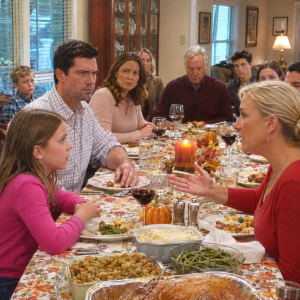
During one Thanksgiving dinner, my father, Robert, called Paige the light of our family. I stood nearby carrying a hot casserole I had prepared because my mother claimed the holiday had overwhelmed her. Nobody noticed when I quietly placed the dish on the table.
For years, I believed greater effort could correct the imbalance. If I became useful, generous, patient, and emotionally steady enough, perhaps my parents would eventually look at me with the uncomplicated tenderness they offered Paige.
I remembered every anniversary, drove through winter traffic to repair my mother’s computer, and paid for my father’s cardiac examination when his insurance coverage temporarily lapsed. I told myself that love motivated those choices, which was only partly true.
The remainder was hope disguised as responsibility.
During high school, I reached the final round of a statewide debate competition after practicing for months. My parents promised to attend, so I reserved two front-row seats and placed folded programs across them.
That morning, Paige called because a boy she liked had ignored her messages throughout the weekend. My mother decided Paige should not remain alone, and my father agreed.
The two reserved seats stayed empty while I delivered my speech and won the competition. Afterward, my coach embraced me as other parents surrounded their children. I continued looking toward those empty chairs despite knowing nobody would arrive.
When I returned home, my mother said she felt proud. Then she asked me to speak quietly because Paige had finally fallen asleep upstairs.
I persuaded myself that their absence did not matter, and over the years, I became exceptionally skilled at repeating that lie.
Part 2: The Loan That Was Supposed to Save a Family
Three years before my daughter’s birth, my parents called during a rainy Tuesday evening. Aaron and I were eating takeout at our small kitchen table when my mother’s name appeared on my telephone.
My father’s business had suffered a serious financial setback. Several customers delayed payments, mortgage installments had fallen behind, and the lender had begun sending formal notices.
“We would never ask if another option existed,” my mother said. “Natalie, we could lose the house where you and Paige grew up.”
My father took the telephone, and his voice sounded smaller than I had ever heard it.
“Asking my daughter for financial help is deeply humiliating, but I do not know where else to turn.”
I pictured the maple tree in the front yard, the fading height marks inside the laundry-room doorway, and the kitchen window my mother opened every spring. Memories temporarily erased the empty debate seats and every celebration organized around Paige.
“How much money would prevent the foreclosure?”
They needed $47,000, almost everything Aaron and I had saved for a down payment on our own house. For six years, we had rented a two-bedroom apartment while property prices steadily moved beyond our reach. That money represented packed lunches, canceled vacations, secondhand furniture, and weekend accounting contracts Aaron accepted despite needing rest.
“These savings belong to both of us, so I need to discuss this with Aaron before making any decision.”
My mother’s silence revealed that she expected an immediate agreement.
After the call, Aaron spread our financial records across the table. As an accountant, he approached difficult decisions with the same careful precision he applied professionally. He entered figures into a spreadsheet, reviewed them twice, and removed his glasses.
“If we provide this money, everything must be documented properly.”
“They are my parents, and asking them to sign legal documents might seem insulting.”
“Their relationship to you is precisely why every obligation must remain clear.”
Aaron never tried preventing me from helping them. He understood that emotionally, I had already decided, but he wanted to protect the future we had built together.
We hired attorney Marcus Reed, whose office occupied the second floor of a brick building near downtown Denver. Marcus prepared a personal promissory note carrying modest interest over ten years. A second lien would be recorded against my parents’ property, ensuring the debt could not disappear during a sale or refinancing.
Near the agreement’s conclusion, Marcus included an acceleration clause.
“This provision permits you to demand the remaining balance after default, unauthorized transfer, or a material violation of the trust supporting this family loan.”
I barely considered the final phrase. My priority was keeping my parents inside their home, not imagining circumstances requiring protection from them.
They signed every page. When Aaron and I transferred the money, my mother cried, while my father held me longer than he had in years.
“You protected this entire family when nobody else could help us.”
For several months afterward, they called more frequently and invited us to Sunday dinners. My mother asked about my work before describing her problems, and I allowed myself to believe the loan had finally changed their perception of me.
In reality, it only clarified the value they assigned to my usefulness.
Two years later, I became pregnant. Aaron researched cribs before the first trimester ended, while I attached an ultrasound photograph to our refrigerator with a red Colorado-shaped magnet.
At sixteen weeks, my obstetrician discovered a placental complication requiring close monitoring. Gestational hypertension followed, and every appointment introduced another restriction.
I first reduced strenuous activity, then began working from home. At thirty-four weeks, Dr. Monica Reyes ordered complete bed rest and instructed me to remain near a hospital capable of immediate intervention.
“The probability of a cesarean delivery is increasing. With your blood pressure and the placenta’s position, any concerning symptom must receive urgent attention.”
Aaron sat beside me with a notebook across his knee.
“Please identify every warning sign that should make us call emergency services.”
Dr. Reyes listed them while he recorded each one. At home, Aaron rearranged his schedule, studied the hospital’s procedures, and kept his telephone volume high throughout the night.
He did not display fear dramatically because preparation was how he managed it. On many sleepless evenings, his steadiness became the only reason I could rest.
I informed my parents about every development.
“We will be there whenever the hospital needs to deliver the baby,” my mother promised.
My father rested one hand against my shoulder during dinner.
“Concentrate on remaining calm because your mother and I will handle everything else.”
Trusting them remained an old reflex, so I believed those assurances.
Part 3: A Celebration Covered in Ruby Pink

During my complicated pregnancy, Paige announced her engagement and pregnancy. Her baby was expected four months after mine, but my parents approached her baby shower as though they were organizing Denver’s most important social event.
The family group chat filled with venue photographs, ribbon samples, floral arrangements, custom cookies, and elaborate decorations. My mother drove ninety minutes to a specialty bakery because Paige wanted ruby-pink frosting in a shade no local shop could reproduce precisely.
“The frosting must match the invitations perfectly, or the entire room will look disconnected,” Paige explained.
My mother treated the requirement with extraordinary seriousness.
I noticed how their delight surrounding Paige’s pregnancy contrasted with the anxious obligation surrounding mine. Nevertheless, I insisted the situations were incomparable. Paige’s celebration offered pleasure, while my pregnancy had become a collection of restrictions and medical terminology.
Surely, I thought, an actual emergency would immediately reveal what mattered most. Surely, a daughter entering an operating room would outweigh decorative frosting.
The emergency arrived three weeks before my scheduled delivery during a Thursday appointment in April. Aaron was meeting clients in Dallas and expected to return that evening.
A nurse measured my blood pressure, frowned, and repeated the procedure. Dr. Reyes entered ten minutes later, reviewed the readings, and ordered continuous monitoring. One nurse collected blood while another fastened sensors around my abdomen.
My daughter’s heart rate dropped.
Dr. Reyes looked directly at me.
“We are admitting you immediately, and the cesarean delivery must happen tonight.”
“How long can we safely wait for my husband’s flight?”
“Waiting for his arrival would create a risk I cannot recommend.”
I called Aaron first. Before our conversation ended, he had left his meeting and reserved the earliest available flight to Denver.