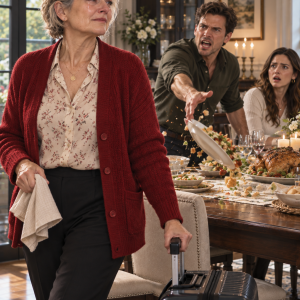
Part 1: The Photograph That Changed Christmas

At 11:47 on Christmas Eve, while I sat on our living room sofa with my feverish six-month-old son resting against my shoulder and his twin sister crying in the bassinet beside the Christmas tree, a photograph appeared on my phone that finally explained why my husband had been so determined to spend the evening away from home.
The picture showed him in a hotel room with another woman, his arm wrapped comfortably around her as they leaned against a pile of white pillows, looking as though they had nowhere else in the world they needed to be.
My husband, Brandon Whitmore, had left our apartment in Philadelphia six hours earlier, insisting that an important holiday gathering with prospective investors could not be missed, even after I explained that both babies were running temperatures and that I was exhausted from caring for them.
“You’re their mother, Emily. I shouldn’t have to cancel my entire evening every time something comes up with the kids,” he had said, adjusting his expensive wool coat while I stood in the hallway holding our son.
Now, looking at the photograph, I recognized the blonde woman beside him as Vanessa Hartley, someone I had met at one of his professional dinners.
Beneath the picture was a message.
“Long night with clients. Don’t keep calling. I need to concentrate.”
I might have confronted him immediately if my son, Oliver, had not begun crying against my shoulder, reminding me that whatever had happened to my marriage, two small children still depended on me.
I checked his temperature, followed the pediatric nurse’s instructions, and settled his sister, Grace, before allowing myself to look at the photograph again.
This time, I noticed the hotel stationery on the nightstand, the two wedding rings, and the unmistakable familiarity between them.
For months, Brandon had dismissed my questions about unfamiliar perfume, late evenings, unexplained expenses, and the second phone he carried everywhere, telling me that motherhood had made me suspicious and overly emotional.
I had gradually stopped questioning him, partly because every conversation ended with me apologizing for having started it.
But there was nothing ambiguous about the photograph.
I saved it, forwarded copies to an email account he could not access, and placed my phone beside the baby monitor.
Shortly after midnight, I remembered that Brandon had promised to buy additional infant medication and claimed he had left it in his winter coat.
I went to the hallway closet, searched the pockets, and discovered a small velvet jewelry case instead.
Inside lay a delicate necklace of pearls and diamonds, accompanied by a receipt showing a price considerably higher than anything I had purchased for myself in years.
Three weeks earlier, Brandon had questioned me for replacing a broken breast pump, insisting that we needed to control unnecessary household expenses.
Yet he had apparently found plenty of money for an extravagant Christmas gift.
Written across the receipt were the words:
“For Vanessa. Our first Christmas together.”
I lowered myself onto the hallway floor, holding Oliver carefully against my chest, and felt something inside me settle into an unfamiliar stillness.
The necklace was painful, but the larger truth had been accumulating for years.
Brandon managed our bank accounts, monitored my purchases, controlled our shared passwords, and expected explanations whenever I wanted to visit my mother or spend money without consulting him.
Two evenings earlier, when I had reached toward his second phone after it rang repeatedly during dinner, he had gripped my wrist hard enough to leave marks.
Later, he had kissed my hand and told me that my behavior sometimes pushed him beyond his patience.
I had believed, or at least tried to believe, that he was simply overwhelmed.
Sitting beneath the soft Christmas lights, I finally understood that I had spent years making excuses for someone who never extended the same generosity to me.
And then I remembered my grandmother.
Part 2: The Promise My Grandmother Made Me Keep
My grandmother, Margaret Ellison, had been a practical woman who preferred sensible shoes, handwritten thank-you notes, and carefully organized financial records, and although she had initially welcomed Brandon into our family, she had insisted on one arrangement before our wedding.
She wanted the inheritance she had established for me to remain independently managed.
At the time, I found her caution unnecessary, particularly because Brandon worked in commercial lending and had repeatedly assured me that he understood how to manage our future responsibly.
“A marriage should be built on trust, Grandma,” I told her during our appointment with her attorney.
She smiled gently.
“Of course it should, sweetheart, but trusting someone doesn’t mean giving away every choice you have.”
Her attorney, Thomas Reed, had prepared a trust agreement that included access to independent funds, temporary housing, legal assistance, and childcare if I ever faced circumstances that made remaining in my household unsafe.
My grandmother made me read that section twice.
“I hope this paperwork spends its entire life collecting dust,” she told me. “But I never want you staying somewhere simply because you cannot afford to go.”
She had been gone for several years, and during that time Brandon had persuaded me that Thomas was unnecessarily involved in our financial affairs, until I eventually stopped contacting him altogether.
At 12:16 that Christmas morning, with both babies finally resting quietly, I found his number and called.
He answered after several rings, sounding surprised until he heard my voice.
“Emily, is everything all right?”
“I need to use the emergency provision Grandma arranged.”
His manner changed immediately, and rather than asking whether my marriage could be repaired, he wanted to know whether the children and I were safe.
I told him about the photograph, the restricted accounts, the marks on my wrist, and Brandon’s decision to leave while the twins were unwell.
Thomas listened without interrupting.
When I finished, he said, “First, I want you to understand that you have resources available to you right now, and you do not need your husband’s permission to use them.”
He arranged temporary accommodation, transportation, and access to money for our immediate needs, then advised me to gather identification, medical information, essential clothing, and anything irreplaceable.
As I packed two suitcases and the babies’ supplies, I kept expecting to feel guilty, as though I were committing some terrible offense by leaving without explaining myself.
Instead, every folded blanket and carefully packed bottle made the decision feel more real.
At 2:10 a.m., a driver arrived outside our building.
I carried Grace downstairs while he helped with Oliver and the bags, and when the car pulled away through the quiet Philadelphia streets, I watched the Christmas decorations disappear behind us.
For the first time in years, I had made an important decision without asking Brandon whether he approved.
Part 3: The Home He Never Owned

The temporary apartment Thomas arranged was modest but comfortable, with a small kitchen, two bedrooms, and windows overlooking a quiet residential street.
I barely noticed the furnishings because what mattered was that Brandon had no key, no access to the accounts paying for it, and no way to monitor every purchase I made.
By morning, my phone was filled with messages.
Related Posts
Five Minutes After Our Divorce, My Husband Said, “Take Our Two Daughters. I Finally Have a Son Coming.” He Had No Idea I Was a U.S. Army Colonel. Four Hours Later, He Was Begging Me Not to Leave—Because a Shocking Secret About His Unborn “Heir” Had Just Turned His Entire Family Upside Down
“Mom, I Sold My $1,200 Guitar to Buy Elena a Wheelchair. Please Don’t Be Mad,” My 13-Year-Old Son Whispered, Hiding His Injured Arm Behind His Back. I Thought He’d Simply Made a Heartbreaking Sacrifice for a Disabled Classmate—Until Two Police Officers Knocked on Our Door the Next Morning. One Held Up a Clear Evidence Bag Containing a Twisted Piece of Metal. My Son Went Pale. Then the Officer Asked, “Ma’am, Have You Seen the Security Footage From Tuesday?”
Five Years After Our Divorce, My Wealthy Ex Still Thought I Had Left Him With Nothing—Until Three 4-Year-Old Girls Ran Into My Arms at the Airport Calling “Mommy.” He Looked at Their Faces, Asked Their Ages, and Began Counting Backward… But the Secret Hidden in His Own Family Went Much Deeper Than Either of Us Knew
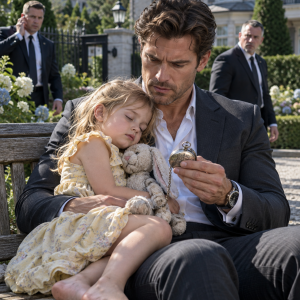
A Barefoot 3-Year-Old Somehow Passed Every Guard at Nathaniel Whitmore’s Estate and Fell Asleep in His Arms—But When Her Worn Stuffed Rabbit Revealed His Father’s Missing Watch and a 23-Year-Old Message, Nathaniel Realized the Graves He Had Visited Since He Was Seventeen Might Be Hiding the Wrong Story