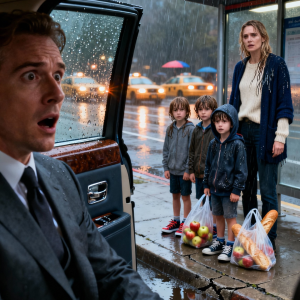
One stormy afternoon, Dania — a gentle, selfless woman — was hurrying home through the pouring rain when she noticed something in the flooded gutter.
It was a young boy, soaked to the bone, barely breathing. Without hesitation, she knelt in the cold water, lifted him into her arms, and ran all the way to the hospital.
The boy’s name was George. At fifteen, he had already lived through unimaginable pain — his mother had died in a car accident, and his remaining relatives had cast him out, leaving him to wander the streets hungry and hopeless.
Dania, unable to ignore his suffering, took him into her home. She gave him food, a bed, and something he hadn’t felt in years — love.
But her compassion came with a price. Her husband, Hubert, grew increasingly jealous. He saw George not as a child in need, but as a threat — someone stealing his wife’s affection. His words turned bitter, his gaze cold.
One night, George overheard him on the phone, saying, “That boy has to go. He’s not one of us.”
Heartbroken and afraid of causing more pain to the woman who had saved his life, George packed a small bag, left a letter on the kitchen table, and disappeared into the darkness before dawn.
Years passed. George faced hunger, violence, and despair — yet Dania’s kindness remained the flame that kept him alive. He worked any job he could find, from cleaning streets to loading docks.
Slowly, with determination and intelligence, he built a life for himself. He studied at night, learned business, and started his own company.