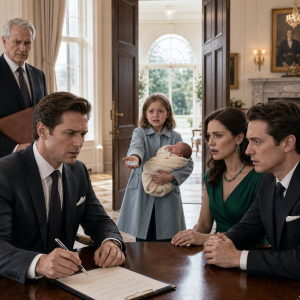
My name is Emily Carter, 23 years old—the only daughter of David and Claire Carter. To the outside world, they were the epitome of success: a sharp lawyer and a sophisticated event planner. But behind the closed doors of our perfect home in Richmond, cruelty lurked.
The night my father broke my jaw for “talking back,” my mother just laughed. “That’s what you get for being useless.” My father leaned over me, his voice cold. “Maybe now you’ll learn to keep that mouth shut.” I smiled through the pain. They had no idea what was coming.
Our family appeared flawless—manicured lawns, charity events, and perfect smiles. But inside, it was a world of fear and silence. My father demanded perfection, and any mistake meant punishment. My mother pretended it was all fine, hiding behind her pearls and wine.
There were fleeting moments of happiness—my 10th birthday petting zoo and a trip to the beach that felt almost real. I still keep a seashell from that day, a reminder that kindness once existed.
I became a straight-A student because failure meant pain. Writing became my secret rebellion—hidden notebooks full of stories about girls who escaped. I dreamed of going to NYU, far from Richmond, far from them.
Only Olivia Moore, my best friend, saw bits of the truth. Her family showed me what love should be. Miss Green, my English teacher, once said, “Emily, your emotions feel real. If you ever need to talk, I’m here.” I wasn’t ready, but her words stayed.
At 14, I brought home a report card with one B+. My father slapped me so hard, I stumbled. My mother sighed, “Don’t disappoint your father again.” That night, I realized—she’d never protect me.
By 16, the control tightened. My phone was monitored, curfews strict, and friends forbidden. When he dragged me out of a study group, I wanted to disappear. That night, I started a secret diary, hiding my bruises and fears beneath the floorboards.
At 17, I applied to NYU for journalism. My father had other plans. “You’ll go to Boston College. Pre-law. I’ve already spoken to the Dean.” “But I want to write,” I protested. “Journalism is for failures,” he snapped.
That night, he beat me for defying him. By morning, I had bruised ribs and a split lip. My mother acted like nothing happened.
When my guidance counselor noticed my injuries, I lied—”I walked into a door.” He didn’t believe me, but fear kept me quiet. My father had power. No one would believe me.
That night, I wrote in my diary: One day, I’ll tell the truth. One day, I’ll be free.