That quiet outcome taught me something important. Justice rarely arrived with microphones, applause, and projection screens. More often, it appeared as one corrected form, one protected account, or one young person learning that asking for records did not make her disloyal.
I continued working as a social worker while directing the initiative with professional oversight. My academic training remained central rather than becoming background decoration for a personal revenge story.
Eli attended childcare during office hours and grew up surrounded by people who respected boundaries around his history.
When strangers recognized our graduation photograph, I thanked them for their kindness before redirecting conversation toward scholarship reform.
He was my son, not a symbol available for public ownership.
Part 6: The Cousin Who Asked For Forgiveness
Three years after the original graduation, Madison requested permission to contact me through her probation counselor. She had completed community service, worked steadily, and begun studying at a community college without altered records or family intervention.
I agreed to one supervised conversation.
She arrived wearing simple clothes and carried no dramatic apology letter. For several minutes, she struggled to look at me.
“I spent childhood believing everything you received reduced what belonged to me,” she said. “My mother taught me that caring for you cost our family opportunities.”
“She used money intended for my care to pay your tuition, yet she still portrayed me as the financial burden.”
Madison nodded.
“I know that now, but knowing does not excuse what I chose with Tyler.”
Her willingness to separate explanation from excuse made the conversation different from Patricia’s appeals.
“Why did you want my scholarship after already receiving private education and support?”
“Because beating you mattered more than needing it. Every time you succeeded, I feared people would notice that your achievements were earned while mine were arranged.”
I appreciated the honesty without offering immediate reconciliation.
“Forgiveness may eventually release anger, but trust requires evidence gathered over time. You cannot receive access to my life simply because you finally understand the damage.”
“I am not asking to meet Eli or become family again. I wanted to acknowledge that he was never the shameful person in that auditorium. We were.”
We ended the meeting respectfully. Madison sent no further messages except annual updates through the counselor until supervision ended.
Years later, I learned that she completed an associate degree and worked in an administrative role unrelated to scholarship decisions. I wished her stability without returning to the relationship we once had.
Patricia wrote several letters from custody, alternating between accusations and requests for forgiveness. I preserved them for my therapist but never responded.
Unlike Madison, Patricia continued describing her actions as necessary reimbursement for raising me. An apology without accountability remained another request for silence.
Eli would eventually ask about our extended family, and I intended to answer honestly without teaching hatred.
Family history could be explained accurately while access remained restricted.
Part 7: What The University Learned
Five years after the scandal, the university invited me to speak at the opening of a student-resource center serving foster youth, independent students, and young parents.
The center offered benefits counseling, academic-record assistance, emergency childcare, secure document storage, and independent scholarship guidance. Its design came from recommendations made by students who had personally navigated those systems.
Standing before the audience, I resisted the familiar version of my story in which one brave student exposed several uniquely dishonest people.
“The fraud continued because authority was concentrated, complaints were isolated, and vulnerable students expected retaliation,” I said. “Removing individuals matters, but durable reform requires systems where one person cannot quietly rewrite another student’s future.”
President Whitaker, nearing retirement, sat in the front row.
After the ceremony, he admitted that leadership had initially considered postponing public disclosure until after graduation.
“We feared the scandal would define the university.”
“What would have defined it was protecting ceremony while harmed students remained invisible.”
He accepted the criticism.
“You were correct, and institutions should not require harmed people to remain polite so leaders can feel responsible.”
Open Door Student Justice expanded into three neighboring counties, but I maintained strict professional boundaries. Every client worked with licensed counsel, while social workers avoided promising outcomes they could not control.
My experience informed the organization without replacing evidence-based practice.
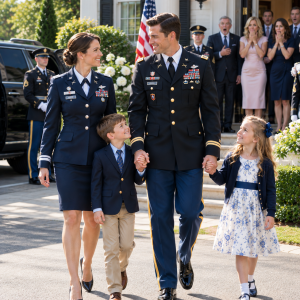
Eli entered elementary school during that period. One evening, he found the framed graduation photograph and asked why he had been onstage as a baby.
“Some people thought carrying you made me less worthy of graduating,” I explained. “They were wrong because caring for someone does not erase your work or your future.”
“Did they laugh at me?”
“They laughed because they misunderstood both of us, but the important people learned the truth.”
He considered my answer before pointing toward the diploma.
“You still got your paper.”
“Yes, and I also learned that nobody else gets to decide whether you belong beside me.”
I kept the explanation simple because children deserve truth appropriate to their age, not an inheritance of adult conflict.
The photograph no longer reminded me primarily of humiliation. It represented the moment an institutional accusation lost its power once verified records became public.
Part 8: The Future We Chose

Many years after that first ceremony, Eli accompanied me to an Open Door scholarship dinner. He was old enough to understand that our family began through emergency guardianship, careful court review, and an adoption decision centered upon his safety.
Before the event, he asked whether I had chosen him because I saw myself in the cardboard carrier.
“Your situation reminded me of my childhood, but similarity did not make you mine,” I said. “I chose to protect you while professionals determined what future served you best, and later the court allowed us to become a permanent family.”
“Would you have let me live with relatives if safe ones had been found?”
“Loving you meant respecting every safe possibility, even if one of them had broken my heart.”
He hugged me without answering.
At dinner, a scholarship recipient described recovering benefits stolen by a former guardian. Her story contained no auditorium confrontation, famous photograph, or public apology. It involved months of paperwork, careful advocacy, and a corrected financial account.
When she thanked our organization, I remembered the girl who once believed graduation required proving she was not a fraud, a burden, or a copy of someone else’s failure.
Patricia had claimed ownership over my pain because she provided a bed. Madison treated my scholarship as compensation she deserved for sharing a household with me. Tyler and Warren assumed students with unstable family support would remain too frightened to challenge official records.
Every assumption depended upon isolation.
The answer was never merely personal toughness. It was reliable documentation, ethical professionals, transparent institutions, and people willing to believe evidence before status.
After the dinner, Eli fell asleep against the car window while rain moved softly across Columbus. The scene reminded me of his earliest weeks, when his entire hand could close around one of my fingers.
For most of my childhood, I believed family was something death had taken and guardianship had distorted beyond recognition.
Eventually, I understood that family was not composed of people who claimed lifelong authority over your gratitude. It was created through protection that respected choices, truth that survived discomfort, and responsibility accepted without demanding ownership.
People laughed when I carried Eli toward my first diploma because they believed we represented two discarded lives standing in the wrong place.
President Whitaker’s apology corrected the record, but applause did not create our worth. Our worth existed before anyone in that auditorium recognized it.
The diploma confirmed my education, the honor stole acknowledged my work, and the investigation restored stolen opportunities. None of those objects defined the family Eli and I later built.
That future began when I refused to let shame decide whether we stepped onto the stage.
THE END