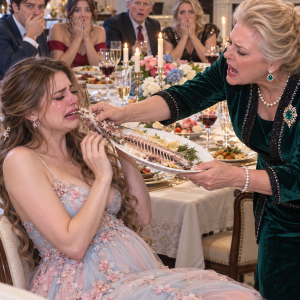
Madeline looked unsettled.
“He told me the car expenses came from a family wealth account.”
I smiled.
“I was the family wealth account.”
Her face changed.
She had fallen in love with a lifestyle without asking who funded it.
I stood.
“Madeline, you thought you were choosing a wealthy man. You were choosing a man with access to a wealthy wife.”
Then I left.
5. The Mediation Table

Four weeks later, Nathan and I attended mandatory divorce mediation.
He looked exhausted.
His suit was wrinkled, his eyes were shadowed, and the confidence I had seen at business dinners was missing.
His attorney opened by accusing me of financial control.
According to their argument, I had dominated major assets and then abruptly removed Nathan’s credit access in retaliation.
Monica responded calmly.
“Mr. Cole maintained employment throughout the marriage, correct?”
Nathan nodded.
“His salary was deposited into an account under his sole control?”
“Yes.”
“My client never prevented him from accessing his wages?”
“No.”
“He maintained retirement assets and separate personal credit?”
Nathan shifted.
“Yes.”
Monica placed the canceled-card documents on the table.
“The card at issue belonged exclusively to my client’s personal credit account. Mr. Cole was an authorized user with no liability for the debt.”
Then came the Southport purchase records.
The jewelry receipt.
The resort invoices.
The messages about transferring title.
The attempted equity restructuring.
Nathan’s attorney read everything in silence.
Eventually, Nathan leaned toward me.
“You were never emotionally present anymore, Lauren.”
I looked at him.
“I worked from home.”
“You were always writing.”
“Writing paid for the house where you lived, the vacations you enjoyed, the credit card you used, and the beach property where you took another woman.”
He looked away.
For two hours, his side asked for pieces of assets that had little connection to him.
A percentage of my publishing intellectual property.
Half the beach-house proceeds.
Long-term support based on lifestyle.
Six months of housing expenses for his parents.
Monica rejected each unsupported demand.
At one point, old guilt returned.
“Should I consider helping Carol and George with temporary rent?” I asked privately.
Monica studied me.
“Do you want to, or have you been trained to feel responsible whenever this family becomes uncomfortable?”
I knew the answer.
“The second one.”
“Then stop negotiating against yourself.”
By late afternoon, Nathan finally asked:
“What exactly do I leave with?”
I looked directly at him.
“Your salary, your retirement account, your vehicle, your personal property, and your lawful share of what we genuinely accumulated together.”
His expression collapsed.
“So your goal was to prove I had nothing without you?”
“No.”
I closed the folder.
“I stopped paying for the illusion that you had more than you actually built.”
6. The Life Without the Illusion
Our divorce became final six months later.
Nathan moved into a modest one-bedroom apartment outside Charlotte.
For the first time, he paid his own rent, vehicle insurance, maintenance, parking, groceries, and daily expenses without my accounts cushioning every decision.
Two months after mediation, he lost his management position.
A mutual acquaintance later explained that Nathan had already been under performance review before our separation. He missed presentations, disappeared during workdays, and allowed his personal problems to spill into client relationships.
I had not destroyed his career.
I had simply stopped protecting him from the consequences of neglecting it.
Madeline sent one message months later.
You were right. I loved a lifestyle he did not own.
I did not respond.
Carol attempted contact several times.
I did not fight with her.
I simply stopped financing a relationship in which generosity had been repeatedly translated into obligation.
Seven months after the divorce decree, my next historical novel was released.
During a television interview, the host quoted a line from the final chapter.
“I did not destroy his life. I merely stopped financing the version of himself he wanted everyone else to believe.”
She asked whether that line came from personal experience.
I smiled.
“Writers borrow from many forms of observation.”
That answer was enough.
One evening after the book tour ended, I sat alone in my Charlotte study.
My phone lit up.
Unknown number.
Two messages.
Can we talk?
I finally understand what I lost.
I read them once.
There was no rush of anger.
No need to hear regret.
No desire to make Nathan watch me succeed without him.
The relationship had become something finished.
I blocked the number and returned to the manuscript open on my laptop.
For years, I thought generosity made a marriage stronger.
Sometimes it does.
But generosity without boundaries can create a dangerous misunderstanding.
The receiver begins believing the gift is ownership.
The dependent begins describing dependence as contribution.
The person being carried begins insisting the floor itself belongs to him.
Nathan never understood the cost of the life around him because I made paying that cost look effortless.
Carol never understood the value of the beach house because she decided family connection converted my private asset into communal entitlement.
Madeline never understood Nathan because she fell in love with the performance before checking who owned the stage.
I had understood all of them eventually.
More importantly, I finally understood myself.
I was not cruel for closing an account that belonged to me.
I was not vindictive for selling a house purchased with my own premarital money.
I was not cold for using documents instead of emotional arguments.
I was not destroying anyone by withdrawing resources they had never been entitled to control.
The old T-shirt remained the strangest symbol of the entire marriage.
For years, Nathan insisted it had sentimental value because it represented who he had been before adulthood, responsibility, and marriage.
When I saw Madeline wearing it, I initially thought the shirt represented his betrayal of me.
Months later, I understood something different.
Nathan had been trying to return to a version of himself that never had to earn the life he wanted.
Madeline represented college nostalgia.
The beach house represented wealth without purchase.
My credit represented luxury without repayment.
His mother represented unconditional approval without accountability.
He wanted all of it simultaneously.
The divorce forced him to live without borrowed versions of adulthood.
I never learned what happened to the old black shirt.
Perhaps Madeline kept it.
Perhaps Carol packed it away again.
Perhaps Nathan still wears it inside his smaller apartment while remembering the weekend when everything collapsed.
It no longer matters.
The things I kept were better.
My name.
My work.
My home.
My financial independence.
And the knowledge that love should never require a woman to finance her own disappearance.
THE END