PART 1: THE WOMAN WHO ANSWERED HIS TELEPHONE
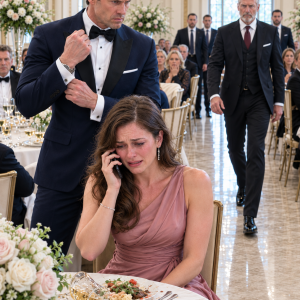
My husband’s mistress answered his telephone while I stood beneath the carved ceiling of our Philadelphia townhouse, waiting beside a tenth-anniversary dinner he had no intention of attending.
The table contained silver inherited from my grandmother, white garden roses, and the same vintage champagne Nathaniel and I had shared after our wedding. A private chef had recreated the meal from the small Annapolis restaurant where he proposed, back when we discussed every dessert because neither of us possessed much disposable income.
Nathaniel’s telephone connected after the third ring, but a woman answered.
“Hello, and may I ask who is calling?”
Her voice sounded young, relaxed, and entirely comfortable with possessing my husband’s telephone.
“This is Eleanor. Please put Nathaniel on the line.”
A calculated silence followed before she responded with faint amusement.
“Of course you are Eleanor, although Nathaniel cannot speak right now.”
Behind her, music drifted through an open space while a child called excitedly for someone. Then I heard my husband laugh with the unguarded warmth he once reserved for private moments inside our marriage.
“What is preventing him from speaking?”
The woman answered without hesitation.
“He is spending the evening with the family that truly belongs to him.”
The sentence converted ten years of marriage into evidence requiring examination.
I ended the call before asking about the woman, the child, or the meaning of her cruelty. Thirty seconds later, Nathaniel sent a message claiming an investor emergency would keep him away from home.
Please do not wait for dinner because this could continue late. I love you.
I read his lie twice before replying.
Take whatever time you need.
A catering supervisor named Anthony appeared in the doorway and noticed my expression.
“Mrs. Prescott, should we keep the anniversary dinner warm until your husband returns?”
“Please divide everything among the staff, including the champagne and anniversary cake.”
After the caterers departed, I entered the upstairs study and opened the leather document box Nathaniel jokingly called my emergency inheritance kit.
My grandfather established Harrington Properties after the Korean War, while my father expanded those holdings throughout the Mid-Atlantic region. My mother later transferred much of the family wealth into the Harrington Charitable Trust, which funded hospitals, libraries, scholarships, and community-health programs.
At forty, I served as one of the trust’s principal trustees and directed much of its philanthropic work. I had attended law school with my friend and attorney, Catherine Doyle, although I chose charitable administration rather than legal practice.
Nathaniel, now forty-four, founded an independent consulting company before our marriage. He built it through genuine intelligence and relentless networking, but he remained resentful whenever powerful people treated him primarily as Eleanor Harrington’s husband.
Our prenuptial agreement protected his company and my family trust. However, it also addressed fraud, material misrepresentation, unauthorized use of trust property, and extramarital conduct that threatened the trust’s public reputation.
Nathaniel had negotiated the document through independent counsel before signing it twelve years earlier. He remembered the numbers but ignored the behavioral provisions because he assumed they would never matter.
A security notification interrupted my review.
PALM SPRINGS RESIDENCE—COURTYARD DOOR OPENED.
The California property belonged to the trust, although Nathaniel occasionally used it during western business engagements. I opened the courtyard camera and saw a tall blonde woman walking barefoot beside the pool in my monogrammed silk robe.
I recognized Serena Vale, whom Nathaniel had introduced twice as a consultant associated with one of his clients.
A five-year-old boy ran into the courtyard and wrapped both arms around her waist. Moments later, Nathaniel appeared in linen trousers, lifted the child effortlessly, and kissed Serena while the boy rested against his shoulder.
The scene contained too much familiarity to represent a secret weekend.
Beside the courtyard gate, a newly installed bronze plaque carried three words:
THE PRESCOTT RESIDENCE.
Nathaniel had attached his name to property belonging to my family’s charitable trust.
PART 2: THE HOUSE HE HAD ALREADY PROMISED
I called Dana Whitmore, the trust’s property manager, who had worked with my family since I was twenty-three.
“Dana, who has been living inside the Palm Springs residence?”
She hesitated before admitting that Nathaniel, Serena, and the child had occupied it periodically for approximately eight months.
“Mr. Prescott said you approved the arrangement and preferred not to receive routine household reports.”
An email appearing to originate from me instructed Dana to extend their access. The language resembled mine, but one letter inside the sender’s domain had been replaced.
I had never written or authorized it.
“Preserve every invoice, access record, message, and household request without contacting Nathaniel.”
Dana promised immediate preservation before revealing something more serious.
Nathaniel had asked whether the trust could sell the residence directly to him. When told that trustees would require independent valuation and formal approval, he claimed I intended to receive the property through a distribution before giving it to him.
“Did he explain why I supposedly planned such an extraordinary gift?”
“He said the residence would become part of an amicable marital transition after the Harrington benefit.”
The annual benefit would occur three evenings later at the Franklin Institute. Nearly three hundred donors, hospital administrators, university presidents, reporters, and foundation leaders would attend.
Nathaniel had recently shown unusual interest in the guest list, press access, speaking schedule, and whether spouses could address the audience.
Dana forwarded another message he had sent to the house manager six weeks earlier.
Keep Serena and Miles comfortable. After the benefit, Eleanor will have no practical choice except accepting the new arrangement.
Miles was apparently the child’s name.
Nathaniel did not plan merely to confess an affair. He intended to use public humiliation as leverage, believing my concern for the Harrington name would force a quiet divorce and perhaps the transfer of the California residence.
I called Catherine shortly before eleven o’clock. She arrived the following morning carrying coffee and the disciplined expression she reserved for emergencies requiring precision.
“Tell me what you know rather than what you currently suspect.”
We reviewed the surveillance recordings, falsified email, access records, property expenses, and Nathaniel’s message concerning the benefit.
The Palm Springs residence had been refurnished for a second household. Trust accounts had paid for children’s furniture, landscaping changes, club membership, wine deliveries, and school-related expenses attached to the local address.
None of those expenses threatened the trust financially. The critical issue involved Nathaniel repeatedly claiming authority he did not possess while using my identity to support that claim.
Catherine examined the prenuptial agreement before offering careful advice.
“His affair alone requires discretion because the reputational provision has a narrow trigger. Your stronger position concerns unauthorized trust assets, apparent impersonation, and any public action he connects to trust governance.”
“If I expose him without provocation, he could claim I created the public damage myself.”
“Exactly, which means you should not open that door unless Nathaniel opens it first.”
We preserved records, initiated an independent digital review, and quietly removed Nathaniel’s authority to approve household expenses at every trust property.
When he called that afternoon, his voice remained affectionate.
“I feel terrible about missing our anniversary, but the investor situation became impossible.”
“Perhaps we can discuss everything after the Harrington benefit.”
He paused before agreeing too quickly.
Nathaniel then described our marriage as increasingly distant and suggested we should clarify several personal matters after the event.
“I still care deeply about you, Eleanor, although neither of us should continue pretending nothing has changed.”
He said he cared rather than loved, and the distinction sounded rehearsed.
During the next two days, I discovered a second telephone inside his locked electronics cabinet. Messages showed that Serena believed our marriage had been privately over for more than one year. Nathaniel told her the Palm Springs residence would become his property and that I would accept a discreet settlement once confronted publicly.
The telephone also contained a photograph of Serena wearing my mother’s diamond necklace.
My mother had worn that necklace at Harrington Trust events for nearly thirty years. I kept it inside a private safe and had not granted Nathaniel access, yet he evidently remembered the combination from an earlier emergency.
The affair had already taken my marriage. Nathaniel’s theft of the necklace demonstrated that he also believed my history had become available for redistribution.
PART 3: THE NECKLACE BENEATH THE LIGHTS