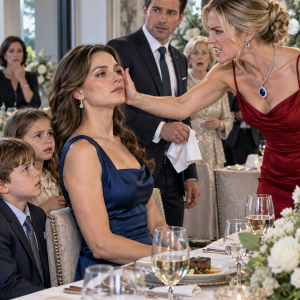
Robert stood at our kitchen counter opening mail and looked genuinely stunned.
“Why would you leave when we have survived every difficult period together?”
“Because surviving beside someone is no longer the marriage I want.”
He asked whether another man existed, and my denial confused him further.
“Then what exactly has happened between us?”
“Twenty-seven years happened, including ten years when I repeatedly described my loneliness.”
Robert insisted we were doing fine, and those words ended my remaining desire to argue. Our life functioned perfectly from his perspective because meals appeared, birthdays were remembered, family relationships remained intact, and his wife still occupied the house.
“I have not been fine for many years, Robert.”
“Why did you never tell me this situation had become so serious?”
He recognized the absurdity before I answered.
Robert sat down and admitted I had mentioned these problems, although he never believed I would actually leave. My complaints had become emotional weather: temporarily unpleasant but ultimately harmless.
“We can repair everything now, because I finally understand what you need.”
Five years earlier, those words would have filled me with relief. Even one year earlier, I might have accepted counseling, new promises, and another schedule designed around hope.
However, timing forms part of love, and the correct words can arrive after the heart needing them has learned to survive without them.
“I no longer want to repair our marriage, although I sincerely wish you had wanted that before losing it became possible.”
That conversation began our separation, but I had already mourned far longer than Robert understood. By Megan’s wedding, I had reached acceptance while his grief had barely begun.
The morning after I declined his dance, Robert appeared outside my hotel room holding two coffees. He remembered my oat-milk vanilla latte, and my grateful smile immediately awakened hope across his face.
His reaction reminded me that kindness required clearer boundaries now.
Inside the room, Robert admitted my polite refusal had humiliated him.
“Would an argument have been easier because you understand how to survive my anger?”
He lowered his eyes, revealing that anger or tears would indeed have comforted him. Either response would have demonstrated that I still desired something from him.
“When did you stop loving me completely?”
“I did not stop suddenly, because I continued loving you through years of disappointment.”
I explained that every complaint represented another attempt to make him understand. I believed the right words, repeated gently enough, would eventually reach him.
“They have finally reached me, Claire, so why does that knowledge no longer matter?”
“It matters deeply, but understanding a consequence cannot automatically reverse it.”
Robert defended himself through accurate statements. He had never cheated, stopped providing, or abandoned our home, while he had worked relentlessly for the family.
I agreed with everything.
“You always came home, Robert, but eventually that became almost everything you offered once you arrived.”
The sentence silenced him. I was not declaring him evil, because I was describing the consequences of choices he considered reasonable.
He remembered anniversaries incorrectly, apologized for missed moments, and promised he never intended harm.
“Intent explains your decisions, although it cannot erase how those decisions shaped my life.”
When he asked whether I missed him, I answered honestly. I missed coffee on our first porch, his terrible singing while painting nurseries, and the family we became when our children were young.
“Missing our past does not mean I want to live there again.”
Before leaving, Robert asked whether I would have accepted his dance invitation one year earlier.
“Yes, and five years earlier I would have crossed the entire room before you finished asking.”
“Why not now, when I finally want to offer it?”
“Because I no longer need a dance to prove you still notice me.”
PART 4: THE LESSON THAT ARRIVED TOO LATE
After the wedding, Robert changed in ways that were not designed to impress me. He telephoned Hannah every Sunday, learned about her work, and drove three hours to watch Lucas complete a half marathon near Nashville.
Lucas appeared genuinely surprised to see his father beside the finish line.
“Dad, I did not realize you were actually coming.”
Robert later repeated those words while we sorted possessions inside our garage. Divorce had transformed our emotional ending into boxes, insurance policies, furniture, and arguments about Christmas decorations.
Holding an old soccer trophy, Robert quietly asked, “I missed considerably more than I admitted, didn’t I?”
“Yes, although recognizing that truth still gives you time to change what happens next.”
He offered no excuse, which represented more progress than another elaborate apology.
Several weeks later, Robert discovered a box labeled MEMORIES containing theater tickets, hotel cards, restaurant menus, photographs, and faded notes accumulated across three decades.
One photograph showed us dancing during our fifteenth anniversary, with my cheek against his chest and both arms wrapped around him.
“You looked completely happy here, so when did everything begin changing?”
“Nothing dramatic happened, and that absence of drama allowed thousands of disappointments to remain unexamined.”
Robert argued that every marriage included busyness, fading romance, and missed opportunities. He asked how anyone could determine when ordinary disappointments justified leaving.
“I knew after realizing that I felt more peaceful whenever you were absent.”
The answer hurt him, but he did not challenge it.
He remembered our dance beside the river and confessed that he had interpreted my tight embrace as unusual romance.
“I held you tightly because I was frightened our marriage had started disappearing.”
Robert covered his eyes and cried silently on the concrete floor. I wanted to touch him, but physical comfort might have disguised a boundary neither of us could afford to misunderstand.
I stayed nearby without pretending we could return.
“I should have danced with you every evening when you still wanted me.”
“The man you are becoming might have done that, but the husband I had did not.”
By autumn, Robert had started therapy. During a conversation about divorce paperwork, he explained that his therapist believed he had mistaken stability for the absence of visible disaster.
“She says I treated your complaints like temporary weather instead of repeated opportunities.”
“That description sounds painfully accurate.”
“I thought you were criticizing me when you were usually asking me to return emotionally.”