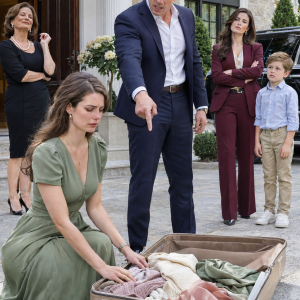
“Sweetheart, I know Mr. Whitmore cared about you, but is defending this inheritance worth everything Patricia is putting you through?”
I looked toward my son’s bedroom.
“It’s worth defending because Edward made this decision freely, Mom, and I won’t let people who spent years humiliating us decide that his wishes don’t matter.”
Later that night, I called Michael Grant, an estate litigation attorney whom Edward had privately retained to protect my interests.
Michael confirmed that Patricia had filed a petition challenging the will.
She claimed that Edward lacked sufficient mental capacity because of his heart condition and that I’d exerted improper influence over him.
“Edward prepared for this possibility, Olivia, and he left documentation explaining why he made these decisions,” Michael said.
During the final year of his life, Edward had met repeatedly with independent legal advisers.
He had also undergone medical evaluations addressing his decision-making capacity.
His estate records included financial disclosures and a recorded statement confirming that nobody had pressured him into changing his plans.
Most importantly, Edward had written a personal letter and instructed his attorney to present it if his family contested the inheritance.
Michael explained that the letter wouldn’t automatically decide the case, but it could help the court understand Edward’s intentions.
I remembered our final afternoon together.
Edward had sat beside me on the balcony, looking thinner than usual but speaking with his customary warmth.
“Promise me something, Olivia, and never let another person’s arrogance convince you that your circumstances make you less deserving of love or respect.”
I promised.
Then he spoke about the meaning of family.
“A real family isn’t defined by the surname somebody carries, because family begins wherever people choose responsibility, kindness, and respect.”
At the time, I believed he was comforting me about my divorce.
Now I understood that he’d been preparing me for something far more difficult.
PART 4 — THE SECRET INSIDE EDWARD’S LETTER
The probate hearing took place in a Philadelphia courtroom several weeks later.
Patricia arrived wearing an expensive black suit, accompanied by Ryan, Vanessa, and two attorneys.
Their argument portrayed me as an opportunist who had remained close to an older man solely to gain access to his assets.
One attorney suggested that continued visits after my divorce proved an unhealthy relationship.
Michael responded by introducing Edward’s medical assessments, estate documents, and recorded statement.
On the courtroom monitor, Edward appeared seated beside his attorney, answering questions clearly.
“I understand the nature and approximate value of my assets, and I am making these decisions voluntarily because I believe they reflect my wishes.”
He also explained that his relationship with me had continued after the divorce because he regarded me as his daughter.
Patricia shifted uncomfortably.
Then Michael requested permission to introduce Edward’s sealed personal statement.
The judge reviewed the proposed document and heard arguments about its relevance before allowing the appropriate portions into evidence.
When the letter was read, I struggled to breathe.
“Olivia has been more than a former daughter-in-law to me, because she gave me the privilege of becoming a grandfather to a beautiful boy named Edward, who was nine months old when I wrote this statement.”
The courtroom fell silent.
Ryan stared toward me.
Patricia’s expression changed from outrage to disbelief.
“What grandson are you talking about, because my son doesn’t have a child with that woman?”
The judge instructed her to remain seated.
Ryan turned toward me, his face pale.
“Olivia, are you telling me we have a son together, and you’ve kept him from me all this time?”
I stood only when permitted to speak.
“His name is Edward, Ryan, and he’s eleven months old now, because he was born seven months after our divorce became final.”
Vanessa covered her mouth.
Ryan looked as though the room had shifted beneath his feet.
I had discovered the pregnancy shortly after filing for divorce.
I remembered sitting alone on my bathroom floor, holding the positive test while wondering how I could protect a child from the hostility I’d endured.
That afternoon, I called Ryan three times.
He didn’t answer.
His only response was a message saying he was occupied with an important family matter and didn’t want to be disturbed.
Three hours later, Patricia posted photographs celebrating Ryan’s engagement to Vanessa.
The caption praised him for finally choosing a woman worthy of the Whitmore family.
I turned off my phone.
I hadn’t handled the situation perfectly, and I knew that my decision to stop trying to contact Ryan carried consequences.
But I was frightened, newly separated, and unwilling to expose my baby to the insults that had destroyed my marriage.
“I tried to reach you when I learned I was pregnant, Ryan, and afterward I was terrified that your mother would treat our child the way she treated me.”
Ryan covered his face.
“I missed his birth and almost his entire first year, Olivia, and I didn’t even know I had a son.”
His anguish was real.
So was mine.
“I spent my pregnancy attending appointments alone, working until shortly before delivery, and preparing everything our son needed without knowing whether you would ever accept us.”
Neither of us could recover that lost time.
But Edward’s letter revealed that one person had been there throughout it.
His grandfather.
PART 5 — THE GRANDFATHER WHO NEVER LEFT OUR SIDE

Michael introduced photographs that Edward had authorized for use if his family challenged the will.
The first showed him sitting beside me in a hospital waiting room during a prenatal appointment.
In another, he held a newborn baby wrapped in a white blanket.
His eyes shone with happiness.
Ryan leaned forward.
“My father knew about the baby, and he was there when our son came home from the hospital?”
I nodded.
Edward had discovered my pregnancy during a Sunday visit when my loose clothing no longer concealed my growing stomach.
He’d dropped his car keys in surprise.
Then he’d embraced me and cried.
“You don’t need to return to Ryan for my sake, Olivia, but I want you to know that this baby will always have a grandfather who loves him.”
From then onward, Edward visited every week.
He accompanied me to appointments when I needed support, carried groceries upstairs, and helped my mother assemble the baby’s nursery.
He bought diapers, blankets, and practical supplies without making me feel ashamed for accepting help.
When I told him I wanted to name the baby Edward, he held my hands for a long time.
“That’s a beautiful honor, sweetheart, but please give him that name only if it makes you happy rather than because you believe you owe me anything.”
On the day we left the hospital, Edward held his grandson against his chest and whispered that the child would never need to prove his worth to anyone.