Together, we left for the ballroom.
Part 8 — The Investor Who Refused to Shake My Husband’s Hand
The ballroom fell gradually silent as my father, Alexander, and I approached the stage.
Gavin had just finished kissing Sloane and was still holding his champagne glass when he recognized Alexander.
His smile vanished.
Within moments, he stepped away from Sloane and hurried toward us.
“Mr. Sterling, this is a wonderful surprise, and I’m delighted you’ve finally found time to join our celebration.”
Alexander acknowledged him politely without immediately accepting his extended hand.
Gavin then noticed my father.
Finally, he looked at me.
“Elena, what exactly is happening here, and why didn’t you tell me you were bringing Mr. Sterling?”
“Because I invited him myself, Gavin, and I’m entitled to attend a celebration of a company I helped create.”
He suggested that we speak privately.
I glanced toward Sloane, who was standing near the stage, visibly uncertain.
“You apparently considered this a suitable place to introduce your new partner, so I don’t see why my professional presence should be treated as inappropriate.”
Gavin lowered his voice.
He wanted to know whether Alexander had discussed an investment with my father.
Alexander answered directly.
“I’ve already spoken with Elena about Harborstone Capital and the original risk assessment system.”
Gavin looked genuinely confused.
“What does that system have to do with this evening?”
“Quite a lot, considering I designed it before it became central to the company’s investment process,” I replied.
Gavin insisted that the system was a corporate asset.
I explained that its contractual ownership required proper review, while my original authorship and professional contribution were matters of documented history.
Then I reminded him about the notice delivered eleven weeks earlier.
“The voting authority you held over my shares has been revoked, Gavin, and all future decisions concerning those rights must involve me directly.”
My father quietly confirmed that the founding agreement remained in effect.
For the first time that evening, Gavin seemed to understand the difference between representing my shares and owning them.
His authority had changed because I had lawfully withdrawn the proxy.
His confident public image could not reverse that decision.
Part 9 — The Second Document He Had Ignored

Gavin tried to regain control of the conversation by suggesting that our personal difficulties were affecting my judgment.
The familiar accusation no longer unsettled me.
Alexander responded before Gavin could continue.
“Elena has explained her position clearly, and any serious investment discussion would require an accurate understanding of Harborstone’s governance and technical leadership.”
Gavin attempted to arrange a private meeting for the following morning.
Alexander declined to make an immediate commitment.
He explained that any potential investment would depend on independent due diligence and the company’s actual circumstances.
Then Gavin turned toward me again.
“We can resolve the shareholder issue later, Elena, but you shouldn’t be creating uncertainty during an important celebration.”
I reminded him that the notice had been delivered through the proper process.
“You received the revocation eleven weeks ago, Gavin, and you had every opportunity to ask why I was exercising my rights.”
His expression hardened.
I continued calmly.
“That wasn’t the only legal document I filed during that period.”
He stared at me.
“What other document are you talking about?”
“Two days after revoking the proxy, I filed for divorce and instructed my attorney to proceed under our prenuptial agreement.”
Gavin looked genuinely stunned.
He glanced toward Sloane before returning his attention to me.
“You filed for divorce eleven weeks ago without having a proper conversation with me?”
“The appropriate notices were issued, Gavin, and I wasn’t required to abandon my decisions simply because you chose not to take them seriously.”
He asked whether I intended to discuss reconciliation.
I told him that my decision about the marriage had been made.
The legal process would continue according to the relevant procedures.
My professional ownership, meanwhile, remained separate from his entitlement to conduct our personal relationship however he pleased.
My father stood silently beside me.
Alexander offered no prediction about Gavin’s future.
I didn’t ask either man to remove my husband from the company.
I had never needed somebody else to declare him powerless.
I needed him to understand that my authority had never belonged to him in the first place.
Part 10 — The Future He Could No Longer Define
The following morning, I woke earlier than usual and sat beside the window with a cup of coffee.
The previous night’s events had changed how people understood my position at Harborstone Capital, but they had not magically resolved the complicated questions ahead.
The divorce remained pending.
Our attorneys still needed to address shared marital property under the prenuptial agreement.
Company records required examination, and the treatment of my original intellectual property had to be established through the relevant documents.
Alexander hadn’t promised to invest.
My father hadn’t promised to force Gavin out.
I hadn’t demanded either outcome.
Instead, I began requesting the company information necessary to exercise my ownership responsibly.
I arranged professional discussions concerning the risk assessment framework and prepared to participate directly in decisions affecting my shares.
For years, I had mistaken avoiding conflict for preserving peace.
Now I understood that silence could also allow somebody else to write an entirely false account of my abilities.
Occasionally, I remembered Gavin standing beneath the chandeliers with Sloane.
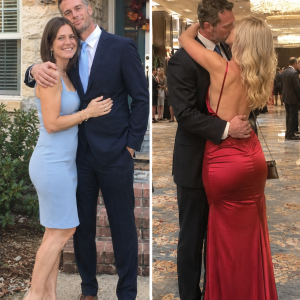
I remembered how effortlessly he had kissed her before four hundred guests and how quickly his confidence disappeared when he recognized the investor accompanying me.
But his embarrassment was not the most important part of that evening.
The important part was that I had entered the ballroom on my own terms.
I was still a founder of Harborstone Capital.
My 35 percent equity remained protected by the agreements we had signed.
My voting rights had returned to my direct control.
And the work I had contributed to the business deserved to be evaluated on its actual merits.
I didn’t know whether Gavin would eventually understand everything his decisions had cost our marriage.
That question belonged to him.
I also didn’t know whether Alexander would ever invest in Harborstone.
His eventual decision would depend on genuine commercial considerations rather than my personal struggle.
What I did know was that I no longer needed either man’s approval to recognize the value of my own work.
Six years earlier, I had believed being Gavin’s wife was inseparable from the future we were building together.
I now understood that a marriage could end without erasing the professional achievements, legal rights, or personal identity of either partner.
Gavin had kissed another woman before four hundred guests because he believed I would remain silent, but I had already made the one decision he never expected: I would no longer allow him to speak for me, vote for me, or decide who I was.
THE END