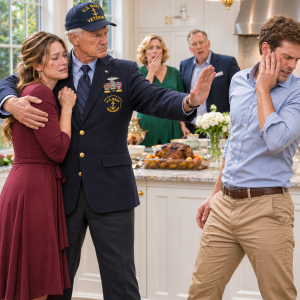
Luke opened the folder. Inside were several handwritten pages.
“I wrote some things down because I didn’t want to forget what I needed to say,” he told me.
He said that when we were in college, he truly had wanted to marry me. He had imagined the ceremony and the house, and the children we might raise. After graduation, however, he felt as if he were failing at every step he thought he needed to complete first. He could not find steady work, could not save the money he thought a wedding required, and every time he felt they were making progress, another challenge arrived.
Then Ben was born, and Luke became responsible for someone who depended on him completely.
“I loved being his dad,” he said. “But I was terrified I wouldn’t be good enough.”
He told me he had believed that once he had enough money, he would feel ready to marry. But after we bought the house, he realized there would always be another bill or another reason to wait. At some point, the wedding he had promised had become a reminder of everything he thought he had failed to accomplish.
“I should have told you that,” he said. “Instead, I let you think we were still moving toward the same thing.”
I asked why he had not told me earlier. He said he was ashamed, and that every year he waited made it harder to admit that his feelings had changed.
“I know it was selfish,” he said. “And cowardly.”
I looked at him carefully. I had heard explanations before, but this was the first time he named what he had done without turning it into something I was supposed to excuse.
He showed me one page in the folder. He had written, I kept trying to protect the life we had by refusing to let her decide whether it was the life she wanted.
I looked up from the page.
“I spoke to someone about this,” he said. “I had an appointment with a counselor.”
That surprised me. Luke had always been uneasy about talking through his feelings with someone he did not know.
“Why did you decide to go?” I asked.
“Because I can’t keep asking you to understand me when I’m not willing to understand myself.”
I was glad he was getting help, but I also knew that one appointment, one apology, or one honest afternoon could not repair years of trust on its own. I told him so, and he nodded.
Then he asked whether I still wanted to marry him.
I thought before answering.
“I still love you,” I said. “And I still want marriage in my life. But I don’t know whether we can rebuild the trust we’ve lost.”
He accepted that without arguing. When I asked whether he actually wanted marriage, he did not give me an easy answer.
“I don’t want to marry you just because I’m afraid of losing you,” he said. “I want to understand whether I can choose it honestly, without waiting until I’m richer or more successful.”
It was not the romantic declaration I had once imagined, but it was the first answer that felt real.
We did not reconcile that afternoon. Luke went back to his parents’ house, and we continued raising Ben together. We began counseling, sometimes separately and sometimes as a couple, and the conversations were difficult. I had to speak about the years I felt foolish for hoping, while Luke had to listen without turning every painful memory into a defense of his intentions.
We did not change overnight. Trust returned in small pieces, through promises Luke kept and through the moments when he told me he was afraid instead of hiding behind another excuse. I also had to learn to say when I was disappointed rather than smoothing everything over to keep the peace.
One evening, after we had taken Ben to the park, Luke asked whether we could walk beside a small lake nearby. His parents were watching Ben for an hour, and the sun was low over the water, leaving a soft gold light across the path.
We walked quietly for a while. Then Luke stopped and took my hand.
“I used to think marriage was a finish line,” he said. “Something I had to earn by becoming successful enough.”
I waited.
“I understand now that it isn’t about proving how much I can provide. I can’t promise you a perfect life, and we already know life doesn’t work that way. But I want to face it honestly with you, not because we have a house or a child, and not because staying together is easier.”
His voice trembled.
“I want to choose you.”
Then he reached into his pocket and took out a small ring box. For years I had imagined that moment with music, flowers, and a perfect speech. Standing beside the lake, I felt something quieter: a cautious hope, mixed with the knowledge that I did not have to answer simply because he was finally asking.
Luke lowered himself to one knee.
“I know I don’t deserve an immediate yes just because I finally found the courage to ask,” he said. “I’m not asking you to forget what happened. I’m asking whether you’re willing to keep building a future with me, this time without hidden promises and without another someday. Will you marry me?”
Tears slipped down my cheeks. I looked at the ring and then at the man kneeling in front of me. I was no longer the twenty-two-year-old who believed love meant waiting until every promise came true. I was a mother, a homeowner, and a woman who understood that someone could love her and still make choices that caused real hurt.
I knelt beside him.
“I need you to understand that I don’t want to go back to the way things were,” I said.
“I know.”
“I don’t want to spend the rest of my life afraid to ask you hard questions.”
“You won’t have to.”
“And I don’t want us to marry because either one of us is afraid the other might leave.”
He took both my hands.
“Neither do I.”
I held his gaze for a long moment, then smiled through my tears.
“Yes. I’ll marry you.”
He wrapped his arms around me, and I felt him crying against my shoulder. I started laughing too, partly from relief and partly because seven years was a very long time to wait for a question that could have been asked with honesty much sooner.
“Seven years, Luke,” I whispered.
“I know. I’m sorry.”
I touched his cheek.
“I know you are.”
The ring fit perfectly, but it was not the ring that made the moment meaningful. It was the fact that, for the first time, I believed we were choosing the same future with our eyes open.
The Day We Chose Each Other

We did not rush into a wedding. We kept going to counseling and had practical conversations about money, legal responsibilities, and what each of us expected from a marriage. We talked about the things we had left unspoken for years, and we made plans for a small ceremony because that was what we both wanted now, not because I had given up on my dream or because we could not afford anything larger.
Six months later, we stood in a garden behind a small event venue. Fewer than thirty guests sat beneath the trees, where white flowers had been tied to the chairs. Maren helped straighten my dress before the ceremony, then studied me in the mirror.
“Are you happy?” she asked.
I took a moment to answer.
“Yes,” I said. “I really am.”
She squeezed my shoulder.
“I’m glad.”
I turned toward her.
“Thank you for telling me the truth.”
Maren shook her head.
“You don’t have to thank me.”
“I do. Sometimes the truth is the most important thing someone can give you.”
When the music began, Ben walked down the aisle carrying a small pillow with our rings. He looked extremely proud of his job, though he stopped halfway to wave at his grandfather, which made the guests laugh. Then I saw Luke waiting beneath the flowers.
He looked nervous, emotional, and entirely present. He was not wearing the confident smile from our college photographs, when we thought we knew exactly how life would unfold. He looked like someone who understood that a promise mattered because of the choices that followed it.
When I reached him, he leaned close.
“You look beautiful,” he whispered.
“Thank you,” I said.
The officiant began speaking, but I found myself thinking about all the years we had spent trying to become ready, and about the conversations we might have had sooner if we had been less afraid of what the truth could change. Then it was time for our vows.
Luke unfolded a small piece of paper, his hands trembling.
“I once promised you a beautiful wedding,” he began. “For years, I thought keeping that promise meant giving you something expensive enough to show how much I loved you. I forgot that the most important part was choosing you.”
He looked directly at me.
“I failed to be honest when I became afraid, and I hurt you because I thought protecting myself was the same as protecting our family. I can’t change those years, but I can promise that from today forward, I won’t ask you to build your future around a truth I’m unwilling to share.”
His voice steadied.
“I choose you honestly, completely, and freely. Not someday. Today.”
I was crying by then. When it was my turn, I took a breath and looked at him.
“I used to believe love meant waiting as long as necessary,” I said. “I thought that if I loved someone enough, patience would eventually make every promise come true.”
I glanced toward Ben, sitting proudly beside his grandparents.
“But I’ve learned that love isn’t only about waiting. It’s also about being brave enough to tell the truth, even when the truth might change everything.”
Luke squeezed my hands.
“I can’t promise we’ll never disagree, and I won’t promise to stay silent just to keep the peace. I promise to keep choosing us as long as we’re both willing to choose each other honestly.”
When the officiant pronounced us husband and wife, Luke kissed me, and our guests applauded. Ben cheered louder than anyone else.
Later, after the guests had left and Ben had fallen asleep in his grandparents’ car, Luke and I sat beneath the garden lights. My feet hurt from dancing, his tie was loose, and a small piece of wedding cake sat on the plate between us.
He took my hand.
“Was it everything you wanted?”
I looked around at the fading flowers, the empty chairs, and the jacket someone had forgotten near the dance floor.
“No,” I said.
He looked startled, so I laughed.
“It wasn’t everything I wanted seven years ago.”
He nodded slowly. I leaned against him.
“It was better.”
For a long time, I had thought the hardest part of our story was waiting for a ring. It wasn’t. The hardest part was waiting for a conversation both of us were afraid to have: Luke feared that honesty would make me leave, and I feared that asking for honesty would make him stop loving me.
I do not believe every relationship can or should survive a loss of trust, and I do not believe an apology erases the hurt that came before it. But I do believe people can change when they stop defending their choices and begin taking responsibility for them. Luke had to learn that, and I had to learn that my dreams, my choices, and my time mattered too.
I did not need to apologize for wanting marriage, and I did not need to accept endless promises simply because I loved the person making them. The proposal was not the happy ending by itself, and neither was the wedding. What mattered was that, when I stopped waiting silently and began asking for the truth, I did not lose myself.
I found my voice, and I knew I would never give it up again.