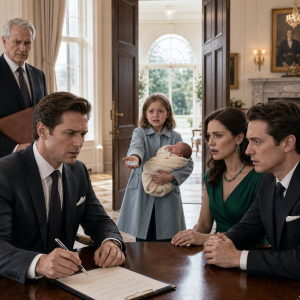
Through a support group, Clara met Naomi, who connected her with a lawyer named Thomas Reed—a specialist in custody cases where disability was used against a parent.
The court battle was relentless. Margaret’s lawyer argued that Clara was “unfit” due to her paralysis.
Michael sat beside his mother, eyes down, saying nothing.
During cross-examination, Thomas asked, “Mrs. Whitmore, do you believe a woman stops being a mother because she uses a wheelchair?”
Margaret hesitated, flustered, but the damage was done.
The judge ordered social services to investigate both living situations. Clara spent days preparing—reorganizing her apartment, setting up Ava’s crib, rehearsing what she would say.
When Ms. Dawson, the social worker, visited, Clara spoke from her soul. “I may not walk again, but I can hold my child, feed her, love her. Motherhood is not measured in footsteps.”
The final hearing changed everything.
Margaret took the stand again, ready to speak—but Michael abruptly stood up.
“Enough,” he said, his voice breaking. “Mom, you never wanted Clara in this family. You took Ava because you wanted control. But Clara has fought harder than anyone I’ve ever seen. She’s Ava’s mother. And I was wrong to stay silent.”
Margaret’s face went white.
The courtroom fell still as the judge delivered the ruling: “Full custody will be returned to the child’s mother, Clara Hayes.”
Hours later, when Ava was placed in her arms, Clara clutched her daughter tightly, tears streaming down her face. For the first time since the accident, she felt whole again.
Months passed. Clara never regained movement in her legs, but she found a new purpose. She launched an online platform for mothers with disabilities, sharing resources, strength, and hope.
Her story captured hearts nationwide.
Every night, as she rocked Ava to sleep, she whispered softly, “We survived. And no one will ever take you from me again.”