Malcolm’s voice was calm, even courteous. “Good evening, officer. Do you have a court order to detain my daughter?”
The guard frowned. “We don’t need—”
“You do,” my father interrupted, producing a phone. “Malcolm Hart, put me through to Assistant State Attorney Keller.” After a pause he said in a clipped, official tone, “Counselor, I’m standing at Hawthorne Aviation with evidence of forged medical consent tied to an attempted custodial interference. If Mr. Blackwell contacts your office, please advise him of Penal Code Section 178.45.”
The guard paled. A second guard appeared, hesitant, and Malcolm simply nodded toward me. Breathe.
Within minutes, we walked away, exiting through a side gate into a rideshare he had ordered under an alias. In the car, streetlights flashing past, he spoke in fragments. “Rowan relies on isolation. We’ll do the opposite. St. Brigid’s General is public, academic, and outside his influence. I’ve called a patient advocate. Security will be notified. We’ll file a birth plan with the charge nurse. No sedation without verbal consent.”
At the hospital, the forged papers were photographed, logged, and secured. A lawyer from the hospital’s legal team listened carefully while a nurse placed me under confidential status. “If anyone calls, we deny you’re admitted,” she explained.
By dawn, my father had already seeded a whisper to the press: prosecutors were reviewing possible custodial interference at a private clinic. It wasn’t our story directly, but it brought light—the one thing Rowan couldn’t fully control.
Days blurred. I gave my statement to investigators, describing the voices, the duffel bag, the forged signature. A women’s rights attorney named Serena Patel filed for emergency protective orders. She explained, “He may try to push for guardianship through a sympathetic judge. Don’t sign anything, don’t agree to mediation without me present.”
When Rowan eventually appeared on television at a charity gala, smiling as he announced a neonatal transport initiative, my stomach turned. In his version, he was the savior of fragile infants. I would have been the grieving complication.
But the documents told another story, one the District Attorney was now tracing through administrators, consultants, and bank wires.

Two days later, labor began. It was work and pain and focus, but when my daughter’s cry cut through the air, everything else collapsed into silence. I named her Elara.
On the third morning, a judge signed the protective order. No removal. Supervised contact only. The words were bricks in a wall that finally stood between us and him.
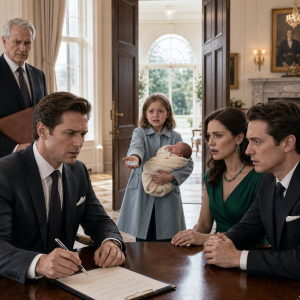
When Rowan was forced to sign the agreement in a conference room, he looked smaller, as if stripped of the aura money once gave him.
As we left, my father adjusted Elara’s blanket. “You once asked for ordinary,” he said quietly.
“I still do,” I answered. “But I know now it’s not a gift. It’s something you fight to keep.”
We stepped into the ordinary light of late afternoon. And for the first time in weeks, I believed it belonged to us.