PART 1 — THE DINNER I HAD HELPED PAY FOR
“You weren’t invited. My wife doesn’t want you there.”
My son’s message arrived forty minutes before the dinner he had told me to attend. I was wearing my navy dress and the pearl earrings Thomas had given me for our fiftieth anniversary when my granddaughter sent a photograph of a blue paper place card.
She had written GRANDMA across it. Underneath, she asked whether I was coming.
I sat down without taking off my coat. Benjamin had given me a time, asked whether I needed directions to the townhouse, and reminded me that parking was difficult. Now he was telling me I had imagined an invitation, while his eight-year-old daughter was apparently saving my seat.
At seventy-seven, I had learned to reread an upsetting message before answering. This one didn’t become kinder on a second reading.
I replied to Alice first.
“Not tonight, sweetheart. I love your card, and I love you.”
Then I opened the drawer where I kept Benjamin’s financial paperwork. I had paid $93,600 toward his household expenses that year, although I hadn’t added it up until the previous week. Seeing the total had frightened me enough to write it on a yellow sheet; it had not frightened me enough to stop.
The folder held mortgage assistance, insurance, school expenses, and repairs that were always described as temporary. When Thomas was alive, we discussed helping the children. After he passed, Benjamin offered to manage the online payments so I wouldn’t have to think about them.
I had kept signing what he brought me.
That evening, I called the bank’s customer service line. After verifying my identity, I asked them to suspend Benjamin’s account access and help me stop the payments supporting his household. The representative secured the access immediately and arranged an appointment for the following morning to review the payment instructions.
Before turning off my phone, I sent Benjamin one message.
“Then you and your wife need to start paying your own expenses. I’m stopping the arrangements through my account.”
I took off my earrings and placed them beside Thomas’s photograph. For several minutes, I couldn’t make myself unfasten the other one’s tiny clasp.
Eight Pages
Clara at the bank printed eight pages of transactions and scheduled payments. The number that startled me was 174, but she explained it carefully: that was the count of payments to Benjamin’s household and related payees during the review period, not 174 separate monthly bills.
Some were familiar. Others had accumulated through arrangements I no longer remembered approving.
“We’ll separate what you authorized from anything you don’t recognize,” she said. “Stopping future support doesn’t settle questions about past transactions.”
“I understand. I don’t want gifts called theft because I’m upset.”
She nodded and handed me a pen. We stopped the scheduled transfers I controlled and began the process for blocking further withdrawals by the affected payees. Benjamin would have to make arrangements with the companies he owed.
By late morning, he had discovered that his access no longer worked. He called repeatedly, then arrived with Genevieve and my daughter, Serena.
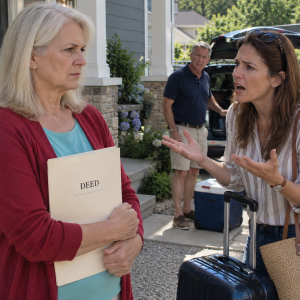
Serena lived three hours away. Seeing her step out holding a blue document wallet worried me more than seeing Benjamin’s angry face.
I opened the door with the chain fastened.
“Mom, what’s going on?” Benjamin asked. “The bank says I’ve been removed.”
“You have.”
Genevieve stepped closer.
“We’re concerned about you. This is a very sudden decision.”
“It was sudden for you.”
Serena looked between us.
“Benjamin said you were confused about the accounts.”
I watched my son examine something on his phone.
“Did he mention the dinner?”
“He said you’d misunderstood the plans.”
I closed the door, removed the chain, and let Serena inside. When Benjamin started forward, I held up my hand.
“I want to speak to your sister alone first.”
“That’s ridiculous,” Genevieve said. “We drove here to help.”
“Then give us a few minutes.”
In the kitchen, Serena put the wallet on the table. I poured tea slowly because my hands were shaking, and she watched closely enough that I set the kettle down.
“I’m upset,” I told her. “You can ask me questions without deciding what that means.”
She looked embarrassed.
“What’s in the wallet?” I asked.
December Fifteenth
There were brochures for a retirement community near Serena, a moving estimate, and a valuation of my house. On a planning sheet, someone had written December 15 beside “anticipated availability.”
It was November. Nobody had asked whether I wanted to move.
“How long have you been discussing this?”
“Since August. Benjamin said you wanted help.”
“Did you hear that from me?”
“No.”
She began explaining the apartments, the transportation, the garden. I let her finish before turning the property estimate toward her.
“Who let someone into my house?”
“Benjamin. He said you knew.”
I sat back. He had my emergency key, the one I had given him after Thomas’s last hospital stay.
Serena opened another pocket in the wallet and took out a copy of the bank form I had signed after the funeral.
“Genevieve said this showed he was handling your affairs.”
“It gave him limited banking access. It didn’t give him my house.”
She looked at it again. Then I placed Clara’s printout in front of her.
“He told me you were having trouble paying for heat,” she said.
I pointed to the utility payments going to his address.
“I was paying for two households.”
She read the total, then asked to see the dinner messages. Afterward, she opened her own conversation with Benjamin.
There were claims about unpaid bills, unopened mail, and strange spending. One photograph showed my kitchen table covered with envelopes. I recognized the yellow sympathy card beside the sugar bowl before I noticed the calendar in the background.
“That was taken after your father’s funeral,” I said.
Serena enlarged the photograph. The year was visible.
“He sent this in September.”
“Three years after it was taken.”
She stopped scrolling. Outside, Benjamin rang the bell again, but neither of us moved.
“Send me those messages,” I said. “Please include the dates.”
When we returned to the door, Genevieve was holding up her phone. She lowered it as Serena stepped onto the threshold.
“Mom never agreed to sell her house,” Serena said.
“Nobody said she had,” Benjamin answered.
“You told me she wanted the valuation.”
He glanced at Genevieve.
“We were trying to get ahead of things.”
“My things,” I said. “You were making plans for my things.”