Five Days After Surgery, My Husband Invited Twelve Relatives to Stay in My House—He Expected Me to Serve Them, but the Locked Front Door Changed Everything
The Request That Changed Everything
Five days after her spinal surgery, forty-seven-year-old Audra Bellamy was still learning how to stand without holding her breath.
Every movement had to be slow. Her doctor had warned her not to lift anything heavier than a small grocery bag, remain standing for more than fifteen minutes, or climb the staircase unless absolutely necessary.
A firm medical support wrapped around her waist, and even walking from the bedroom to the bathroom left her exhausted.
That Thursday morning, Audra sat on the edge of the bed in their home in Naperville, Illinois, carefully trying to put on a pair of soft slippers.
Her husband, Nolan Bellamy, entered the room while looking at his phone.
He did not ask how she felt.
He did not notice that her hands were shaking.
Instead, he stopped near the doorway and spoke as though he were reminding her about an ordinary appointment.
“My family will arrive Saturday morning.”
Audra looked up.
“Your parents?”
“My parents, Vaughn and his boys, Paige and her daughter, Aunt Darlene, Uncle Curtis, and a few others.”
Audra stared at him, waiting for the rest of the explanation.
Nolan slipped his phone into his pocket.
“There will be twelve people. They are staying for two weeks, so we need to prepare the guest rooms, buy groceries, and make sure everyone has clean towels.”
For a moment, Audra honestly believed he was joking.
Then she saw his expression.
He was completely serious.
“Nolan, I had spinal surgery five days ago.”
“I know.”
“I can barely walk to the kitchen.”
“They already made their plans.”
Audra placed one hand against the support around her waist.
“Can you ask them to postpone the visit for a few weeks? The doctor said I need quiet, rest, and limited movement.”
Nolan’s face tightened with irritation.
“No one should have to rearrange an entire family gathering just because you are uncomfortable.”
The words settled heavily between them.
Audra studied the man she had been married to for twenty-two years.
“This is not discomfort. I am recovering from surgery.”
“You have always managed before.”
“This time I cannot.”
Nolan reached for the door.
“Then find a way. They will be here Saturday.”
He left without closing the door behind him.
Audra remained still for several minutes.
The ache in her back was real, but the deeper pain came from realizing that her husband did not see her as someone who needed care.
He saw her as the person who made everyone else comfortable.
Twenty-Two Years of Invisible Work
Audra could not sleep that night.
Beside her, Nolan rested peacefully while she stared at the ceiling and remembered every family visit they had hosted since the early years of their marriage.
Nolan’s mother, Maribel, always arrived first and immediately inspected the house.
She commented on the dust near the windows, the temperature of the guest room, the firmness of the pillows, and the way Audra prepared coffee.
Nolan’s father, Grant, expected breakfast before seven every morning.
Nolan’s older brother, Vaughn, usually brought his sons without packing enough clothes. Within a day, Audra would be washing their shirts, searching for extra socks, and preparing separate meals because one child disliked vegetables while the other refused anything spicy.
Nolan’s younger sister, Paige, often arrived with her daughter and disappeared for hours to visit friends, leaving Audra to supervise the child.
Audra purchased groceries, washed bedding, arranged sleeping spaces, cleaned bathrooms, planned activities, made reservations, and drove relatives wherever they wanted to go.
In family photographs, she was usually standing near the edge of the frame.
Sometimes she was wearing an apron.
Sometimes she was carrying a tray.
Sometimes she was missing from the photograph entirely because she was still in the kitchen.
Everyone praised Nolan’s beautiful home and his generosity.
No one asked Audra whether she was tired.
No one offered to pay for groceries.
No one washed a towel.
No one ever said, “Sit down. We will take care of you today.”
That night, Audra finally understood something she had spent years refusing to admit.
Her kindness had slowly become an obligation in everyone else’s eyes.
The House They Called His
The following morning, Audra carefully opened the bottom drawer of the dresser where she stored important documents.
Under insurance papers and old tax records, she found a blue folder that had belonged to her father.
Inside was the deed to the house.
Her parents had purchased the property in 1997, when Audra was still in college. After they passed away, the home had been left entirely to her.
She read the ownership line twice.
Audra Bellamy, sole owner.
Nolan had never paid much attention to that detail.
After they moved in, he began calling it their home. Over the years, “their home” gradually became “his house” whenever decisions had to be made.
He invited people without asking.
He rearranged rooms without consulting her.
He promised the guest suite to relatives before checking whether Audra had other plans.
She had allowed it because she believed keeping peace was more important than being heard.
Now, sitting in her childhood home while recovering from surgery, Audra realized how much of herself she had surrendered.
She reached for her phone and called Lenora Price, the attorney who had handled her parents’ estate.
After listening carefully, Lenora asked one question.
“Is your name still the only name on the deed?”
“Yes.”
“Then you have the right to decide who stays in the property.”
Audra hesitated.
“Even though Nolan lives here?”
“He lives there as your husband, but he cannot invite twelve long-term guests against your clear objection, especially when the arrangement interferes with your medical recovery.”
Audra looked toward the bedroom door.
“I do not want to be cruel.”
Lenora’s voice softened.
“Protecting your health is not cruelty. Setting a boundary after twenty-two years of being ignored is not selfishness.”
Those words stayed with Audra long after the call ended.
For the first time in many years, she did not feel angry.
She felt clear.
A Different Kind of Preparation
Over the next two days, Audra made several careful arrangements.
She contacted a licensed renovation company about repairing water damage in the upstairs hallway, refinishing the hardwood floors, and repainting several interior rooms.
The work had been delayed for months because Nolan never wanted the inconvenience.
The contractor confirmed that the project could begin Saturday morning and would take approximately two weeks.
Because of the floor treatment, paint fumes, equipment, and exposed sections of wall, the contract required that the home remain unoccupied during the work.
Audra then called her insurance provider.
Her medical coverage included a temporary recovery apartment equipped with an elevator, safety rails, a walk-in shower, and scheduled nursing visits.
On Friday afternoon, a transportation service arrived.
Audra packed clothing, medications, legal documents, her laptop, and a framed photograph of her parents.
Before leaving, she placed a note on the kitchen table.
“Following medical advice, I have moved temporarily to a recovery apartment. Renovation work begins Saturday morning. The house must remain unoccupied until the project is complete. Authorized contractors have access to the property. Please do not interfere with their work.”
She read the note one final time.
Then she left.
The Family Arrived at a Locked Door
Saturday morning was bright and unusually warm.
At ten fifteen, three large vehicles pulled into the driveway.
Relatives climbed out carrying suitcases, coolers, pillows, toys, grocery bags, and folding chairs.
Maribel Bellamy immediately began assigning rooms.
“Grant and I will take the downstairs suite because he should not use the stairs.”
Paige pointed toward the garage.
“I brought extra toys for Lacey. Audra can keep her busy while we go downtown tomorrow.”
Vaughn opened the back of his SUV.
“I hope she stocked enough food. The boys have been eating constantly.”
Nolan forced a smile and walked toward the front door.
Then he stopped.
A large sign had been attached beside the entrance.
PROPERTY CLOSED DURING RENOVATION. NO OCCUPANCY PERMITTED.
Through the windows, they could see furniture covered in protective sheets. A worker was preparing the floors while another inspected the damaged wall upstairs.
Maribel frowned.
“What is going on?”
Nolan pulled out his phone and called Audra.
She let it ring several times before answering.
“Where are you?” he demanded.
“At the recovery apartment.”
“My entire family is standing outside.”
“I asked you to postpone the visit.”
“You arranged construction without telling me?”
“You invited twelve people to stay for two weeks without asking me.”
Nolan lowered his voice and stepped away from the group.
“The children are tired. My parents drove six hours.”
“I am sorry they made the trip, but I cannot host them while recovering from surgery.”
“This is my house too.”
Audra’s response was calm.
“No, Nolan. This is the house my parents left to me. For twenty-two years, I allowed you to treat it like a private hotel for your relatives. That arrangement ended when you told me my recovery did not matter.”
He glanced toward his family.
Everyone was watching him.
“You are embarrassing me.”
“I did not invite them. You did. You will need to find a solution.”
Audra ended the call.
A few minutes later, Maribel called her.
“A loyal wife does not leave her husband to manage a family gathering alone.”
Audra took a photograph of her medical instructions and sent it to her.
The restrictions were clear: limited standing, no heavy lifting, no unnecessary stairs, and several weeks of protected recovery.
Audra added one message.
“These are my medical restrictions. I hope you find comfortable accommodations.”
She then placed her phone on silent.
Nolan Finally Saw the Work
Nolan found rooms at a nearby hotel, but because of a weekend conference, the available accommodations were expensive.
The two-week stay cost nearly six thousand dollars before meals, transportation, or additional expenses.
For the first time, Nolan had to manage everything Audra had quietly handled for decades.
His mother disliked the hotel pillows.
His father had forgotten one of his daily medications.
Vaughn’s sons wanted different restaurants.
Paige expected Nolan to watch her daughter while she met an old friend.
Aunt Darlene required a room away from the elevator but complained when she had to walk too far.
Uncle Curtis wanted a specific brand of coffee.
On the first evening, Nolan drove to three stores because everyone wanted different snacks.
At eleven thirty, he was still searching for the kind of crackers his mother preferred.
The following morning, he arranged breakfast for twelve people, only to discover that half of them had changed their minds after he placed the order.
By the third day, his messages to Audra began arriving.
“My mother says the hotel room is too cold.”
“Vaughn wants me to take the boys to the mall.”
“Paige left Lacey with me without asking.”
“Dad does not like the restaurant I chose.”
Audra did not respond.
She attended physical therapy, rested when she needed to, read a novel she had abandoned months earlier, and ate meals without jumping up every few minutes to serve someone else.
On the sixth day, Nolan called again.
This time, his voice sounded different.
“I did not realize how difficult this was.”
Audra looked out the apartment window.
“You did not realize because I handled everything before you noticed there was a problem.”
“My mother criticizes every decision. Vaughn does not help. Paige disappears and leaves me responsible for Lacey. I have barely slept.”
“I lived that way during every family visit for twenty-two years.”
There was a long silence.
“I think I finally understand.”
Audra’s eyes filled with tears, but her voice remained steady.
“No, Nolan. You are beginning to understand. The painful part is that you could have understood years ago if you had ever chosen to look.”
The Cost of Being Taken for Granted
That afternoon, Audra opened an old household budgeting file on her laptop.
For years, she had recorded family expenses, including the cost of Nolan’s relatives’ visits.
She added grocery bills, restaurant charges, extra utilities, replacement bedding, transportation costs, rental vehicles, tickets, emergency purchases, and repairs made after crowded gatherings.
The total shocked her.
Over twenty-two years, she had spent more than two hundred thousand dollars supporting visits that everyone treated as free vacations.
Then she estimated the time.
Thousands of hours spent cooking, cleaning, driving, organizing, shopping, washing laundry, caring for children, and smoothing over disagreements.
The money mattered, but the time hurt more.
She had given away a significant part of her life while everyone else called it hospitality.
Audra prepared twelve folders.
On the front of each one, she printed the same title:
“TWENTY-TWO YEARS OF WELCOME.”
The Meeting in the Living Room
When the renovation ended, Audra asked Nolan to bring the family back to the house for one final conversation.
They gathered in the freshly painted living room.
Maribel stood when Audra entered, apparently expecting an apology.
Audra did not offer one.
Instead, she handed a folder to each person.
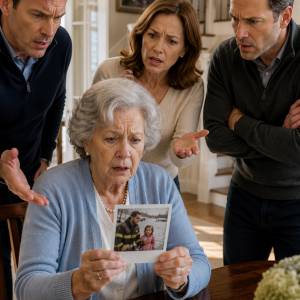
The room grew quiet as they began turning the pages.
Vaughn found the receipt for a rental car Audra had paid for when he arrived years earlier without transportation.
Paige found photographs of Audra caring for Lacey while Paige spent entire afternoons shopping and visiting friends.
Maribel saw pages of receipts for the special groceries Audra had purchased only for her.
Audra stood before them with one hand resting gently against the support around her waist.
“I am not asking anyone to repay me.”
Vaughn looked up.
“Then why did you make these?”
“Because I need you to see what you never wanted to notice.”
No one spoke.
“Can any of you name one visit when I was treated like a member of the family instead of the person responsible for serving everyone?”
Grant lowered his eyes.
Audra continued.
“Did anyone ever ask whether I was tired, whether I could afford the groceries, or whether I even wanted twelve people staying here?”
Paige looked down at the photographs.
“I thought you enjoyed having everyone around.”
“I enjoyed belonging to a family. I did not enjoy disappearing so the rest of you could feel comfortable.”
Maribel closed her folder sharply.
“This feels humiliating.”
Before Audra could answer, Nolan stood.
“No, Mom. What was humiliating was all of us arriving here knowing Audra had just undergone surgery and still expecting her to take care of us.”
Maribel stared at him.
“Nolan—”
“I was the worst one. Audra told me she could not manage the visit, and I told her to find a way. I treated her health as an inconvenience because I did not want to disappoint any of you.”
He turned toward Audra.
“I was wrong.”
It was not enough to erase twenty-two years, but it was the first time Nolan had defended her in front of his family.
For the first time, he was not asking her to protect everyone else’s feelings.
He was finally acknowledging hers.
New Rules for Their Marriage
The family left quietly that evening.
There were no dramatic promises and no instant transformation.
Maribel did not apologize.
Grant said very little.
But everyone carried a folder home.
Several days later, Audra and Nolan sat together at the kitchen table.
Nolan wrapped both hands around his coffee cup.
“I am afraid I have damaged our marriage beyond repair.”
Audra answered honestly.
“Forgiveness does not mean returning to the same life.”
“I know.”
“An apology only matters if your behavior changes when no one is watching.”
Nolan nodded.
Together, they created new household rules.
No overnight guest would be invited without both of them agreeing.
Relatives would contribute to groceries, transportation, and cleaning.
Parents would remain responsible for their own children.
Long visits would require hotel accommodations.
Most importantly, Audra would never again be expected to sacrifice her health to protect someone else’s comfort.
Nolan began attending physical therapy appointments with her.
He learned how to prepare simple meals, manage laundry, organize appointments, and maintain the house.
He did not stop when Audra became stronger.
He continued after she could walk without assistance.
The First Real Apology
Six weeks later, they invited only Nolan’s parents for lunch.
Maribel arrived carrying a large casserole dish.
It was the first time in twenty-two years that she had brought a complete meal.
She placed it on the kitchen counter without meeting Audra’s eyes.
“I thought this might save you from having to cook so much.”
During lunch, Vaughn called and announced that he wanted to stop by the following day.
Nolan answered immediately.
“Tomorrow does not work for us. Next time, ask first and give us enough time to plan.”
Audra looked across the table.
Nolan met her eyes and smiled.
He had finally said “us” in a way that included her voice.
As Maribel prepared to leave, she paused near the front door.
“Audra, about what happened…”
Her voice weakened.
“I did not understand how much you were doing. Or perhaps I understood, but pretending not to notice made my life easier.”
Audra waited.
Maribel took a breath.
“I am sorry.”
Audra did not immediately say everything was fine.
It was not.
But she opened her arms.
The embrace was brief, quiet, and sincere.
Walking at Her Own Pace
Several months later, when Audra had fully recovered, Nolan planned a weekend trip to Door County, Wisconsin.
He booked the hotel, packed the car, planned the route, and handled every detail himself.
He did not invite anyone else.
On their first morning, Audra woke to silence.
There were no children calling from another room.
No relatives demanding coffee.
No list of meals waiting to be prepared.
She opened the window and watched sunlight spread across the water.
Nolan approached her.
“What would you like to do today?”
The question affected her more deeply than any expensive gift could have.
For twenty-two years, people had told Audra what they needed from her.
Almost no one had asked what she wanted.
She took Nolan’s hand.
“I would like to walk slowly along the shore.”
He nodded.
“Then we will walk at your pace.”
They left the hotel and followed the quiet path near the water.
Audra walked without pain, without medical support, and without the familiar feeling that she was responsible for carrying everyone else’s comfort.
For the first time, she was not rushing ahead to prepare the way.
She was not walking behind everyone while cleaning up what they left behind.
She was walking at her own speed.
And Nolan, finally, was walking beside her.
Kindness is a beautiful gift, but when people begin treating your generosity as an obligation, setting a firm boundary becomes an act of self-respect rather than selfishness.
The work performed quietly inside a home may be invisible to those who benefit from it, but that does not make the time, effort, exhaustion, and emotional cost any less real.
A loving partner should never ask you to place your health at risk simply because protecting you would inconvenience relatives, disrupt traditions, or require an uncomfortable conversation.
People often claim they did not know how much you were doing, when the truth is that your silence allowed them to enjoy the benefits without facing the cost.
Saying no does not destroy healthy relationships; it reveals which relationships were built on mutual care and which ones depended entirely on your willingness to keep sacrificing.
An apology becomes meaningful only when it is followed by consistent action, changed habits, clearer boundaries, and respect that continues even after the immediate conflict has passed.
You are allowed to protect the home you built, the health you are trying to recover, and the peace you have spent years giving away to people who rarely noticed your needs.
A person can love their family deeply while still refusing to be their unpaid host, constant problem-solver, childcare provider, driver, cook, cleaner, and emotional shield.
Sometimes the moment you stop rescuing everyone is the moment they finally understand how much weight you had been carrying for them all along.
The greatest sign of healing is not simply learning to walk without pain, but learning that you no longer have to rush ahead for others or remain behind cleaning up their lives—you are allowed to move at your own pace.