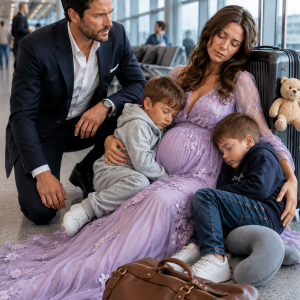
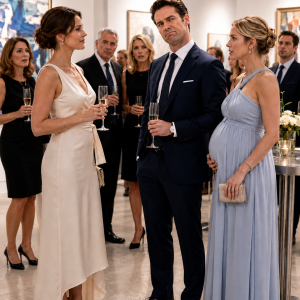
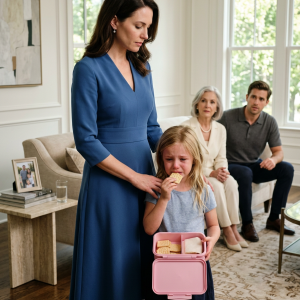
Six hours earlier, they had been “the girls.”
“Our custody agreement specifically permits relocation to Massachusetts. You signed it forty minutes ago.”
I heard papers moving.
“That’s not what I thought that meant.”
“You should have read it.”
“Marissa, don’t get on that plane.”
I handed the boarding passes to the gate agent.
“Goodbye, Preston.”
“Wait.”
I waited.
“What did you mean about the keys?”
I looked through the terminal window.
Our plane was waiting outside.
“You’ll find out.”
Then I ended the call and took my daughters home.

Twenty-One Weeks
Boston was cold when we arrived.
My mother had left the porch light on.
Sadie ran into the house before I could stop her.
Tessa stayed beside me.
She looked back at the car, then at our suitcases.
“Are we really staying?”
“Yes.”
“For how long?”
I picked up one suitcase.
“As long as we need.”
She nodded.
Then she grabbed the smaller suitcase herself.
That night, after both girls were asleep, my phone showed seventeen missed calls.
Nine from Preston.
Four from Jocelyn.
Two from Colleen.
One from Franklin.
And one from the property manager in Atlanta.
I called the property manager first.
“Hi, Marissa. Sorry to bother you. We received the ownership instructions this afternoon.”
“Okay.”
“Mr. Hargrove seems confused.”
I closed my eyes.
“I’m sure he is.”
“He says the apartment was awarded to him in the divorce.”
“It wasn’t.”
“That’s what our records show.”
The family real-estate company had allowed Preston to remain temporarily because I requested it during the divorce.
Now that the marriage was over, he had two choices.
Sign a market-rate lease.
Or leave within thirty days.
The SUV was simpler.
Corporate fleet vehicle.
It had to be returned.
I thanked the manager and hung up.
Then I called Preston.
He answered immediately.
“You planned this.”
“Planned what?”
“They’re telling me I don’t own the apartment.”
“You don’t.”
“We lived there for seven years.”
“Yes.”
“I paid for that place.”
“No, Preston.”
He stopped.
“What?”
“You paid utilities. Some groceries. Household expenses. The apartment belongs to Caldwell’s property division.”
“Your family’s company?”
“Yes.”
“And the SUV?”
“Fleet vehicle.”
I could hear him breathing.
“You’ve been lying to me for twelve years.”
“About what?”
“About everything.”
“Name one lie.”
Nothing.
So I waited.
Finally:
“You let me think those things were ours.”
“They were available to our family while we were married.”
“That’s the same thing.”
“No. It isn’t.”
He lowered his voice.
“How much money do you actually have?”
That was the first time in twelve years he’d asked.
I looked through the kitchen doorway.
Tessa had come downstairs.
She stood barefoot on the hallway rug, listening.
“That isn’t relevant to you anymore.”
“Marissa—”
“Goodnight, Preston.”
I hung up.
Tessa remained in the doorway.
“Is Dad mad?”
I put my phone face down.
“Yes.”
“At us?”
“No.”
She nodded, but I could tell she wasn’t convinced.
I opened my arms.
She came to me.
And for the first time since we’d left Atlanta, my daughter cried.
Three days later, Jocelyn called.
Her voice sounded different.
No confidence.
No advice.
“Marissa, did Preston tell you what happened at the ultrasound?”
“No.”
She hesitated.
“Mallory said she was fourteen weeks pregnant.”
I waited.
“The doctor says the baby is measuring around twenty-one.”
I sat down.
“Okay.”
“Do you understand what that means?”
I did.
But I made her say it.
“Tell me.”
“The dates don’t match.”
And just like that, the little boy everyone had already crowned as the future of the Hargrove family had become a question no one wanted to answer.
The Question Nobody Asked Before Buying the Blue Onesie
Preston called that evening.
“Did Jocelyn tell you?”
“Yes.”
“Mallory says the dates could be wrong.”
“They could.”
“The doctor doesn’t think they’re wrong.”
I said nothing.
“She was still seeing Ricardo.”
Wade Mercer, I later learned, was Mallory’s former boyfriend.
“Okay.”
“That’s all you’re going to say?”
“What would you like me to say?”
“I don’t know.”
For once, Preston sounded exactly like what he was.
A man who didn’t know.
“I’m getting a paternity test.”
“That’s probably sensible.”
He gave a short laugh.
There was no humor in it.
“My mother bought an entire nursery set.”
I almost said something cruel.
I didn’t.
“Preston, I need to put Sadie to bed.”
“Marissa.”
“What?”
“Did you know this would happen?”
“How could I possibly know?”
“I don’t know. It feels like everyone knew something except me.”
I looked at the dark kitchen window.
That sentence stayed with me.
Because for twelve years, that was how I had felt.
But I didn’t say it.
“Goodnight.”
Two weeks later, I returned to Caldwell Freight & Logistics.
Not as an assistant.
Not as someone’s ceremonial family representative.
I resumed the role I’d stepped away from years earlier: Regional Strategy Director for the Northeast division.
On my first morning, I wore a navy blazer I hadn’t touched since Sadie was a baby.
Tessa watched me button it.
“You look important.”
“I’m exactly as important as I was yesterday.”
She smiled.
“You look more important.”
I laughed.
That felt strange.
Then good.
“Mom, You Sing Now.”
Three months passed.
Preston moved out of the Atlanta apartment.
He returned the SUV.
He rented a smaller place closer to his office.
None of that made me happy.
It didn’t make me sad either.
It was simply what happened when someone discovered that access and ownership were not the same thing.
One Tuesday morning, I was making pancakes before school.
Sadie was sitting at the kitchen island pouring too much syrup onto one pancake.
Tessa was tying her shoes.
Then she looked up.
“Mom?”
“Hmm?”
“You’re different here.”
I turned from the stove.
“Different how?”
She shrugged.