At dawn, a stranger observed the building from the garage, snapping photos of license plates and entrances. Across the city, Raul received the images, nodding grimly. The chase had begun.
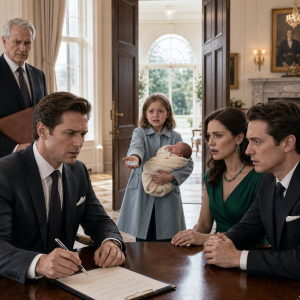
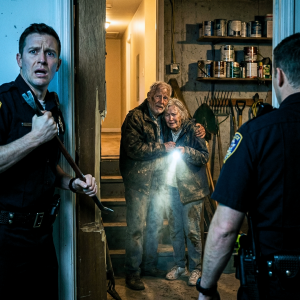
Later that morning, two police officers arrived with a legal notice. “Emergency custody transfer order,” one announced. “Temporary guardianship will be transferred to the next of kin.” Lila clutched Noah, trembling. Marcus held Ethan, his jaw tight. “You’re sending them back to that environment?” he asked quietly.
Before the situation could escalate, Detective Soto arrived. “The parents’ car accident was no accident,” she said firmly, placing a sealed file on the desk. Evidence confirmed the brake tampering, and attempts to alter hospital records were already documented. The officers exchanged tense glances, realizing the weight of truth in her hands.
Lila explained simply, clearly: “They threw us out. Noah had a fever. Marcus helped us. I wasn’t kidnapped.” Her words echoed through the room. Leo presented the photos he had taken in the ER, showing an envelope of falsified records. “I took it immediately and sent it to Detective Soto,” he said.
The courtroom, later that week, was tense. Lawyers argued fiercely. But the judge’s decision was firm: temporary custody to Marcus under supervision, a no-contact order against Vanessa and Raul, and an immediate referral to prosecutors for criminal charges. Handcuffs clicked, and justice was visible in the relief of the children’s faces.
Months later, the apartment was filled with warmth. Pancakes cooked on the stove, the smell of butter and bread blending in the kitchen. Caleb made shapes in the batter, Lila arranged colored pencils on the coffee table, and Leo taught Ethan to high-five. Marcus watched them, silent and steady, heart full.
Lila—now fully part of this makeshift family—held Noah on her hip, laughing shyly as the children played. At the table, spoons clinked together in unison. Laughter and voices intertwined like music, a ritual of healing. Outside, the city stretched endlessly. Inside, they had a home.
In the quiet, Marcus realized something simple: kindness, a spoonful of milk, a phone call at the right moment, or a steadfast hand could change the course of a life. The law could only follow the truth; people like him—people who cared—created it.
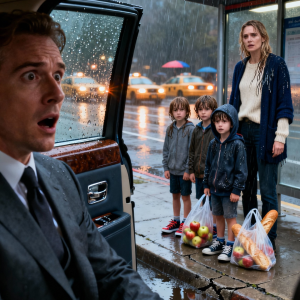
And he asked quietly, to himself and to the world: if you saw three children being abandoned, would you stop? Could you make the smallest difference today? For Lila, Ethan, and Noah, someone had. And now, they were safe, together, and finally, home.