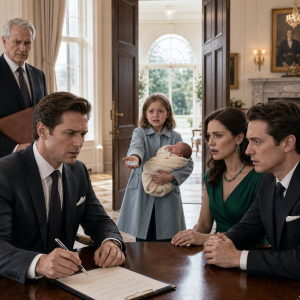
“He told me it was a safe property deal,” Nora said through tears. “He needed me to sign as co-borrower. I didn’t read everything—I just trusted him. Now he’s gone. His phone, his office—everything. And the banks say I owe them all.”
I felt my heart sink. “You didn’t tell me sooner?”
“I thought I could fix it,” she whispered. “They said if I don’t pay, they’ll take the house.”
Our house.
Her rage earlier wasn’t greed—it was panic. She was drowning.
The next day, I spoke with my lawyer. He confirmed what I feared: the documents she’d signed weren’t temporary—they were binding. Noah had forged IDs, leaving her legally responsible for the entire debt.
When I told her, she whispered, “So it’s over?”
I wanted to say no—but I didn’t know anymore.
A week later, she moved back in, pale and hollow. We coexisted in silence, moving around each other like ghosts. Some nights, I’d hear her crying in her old room, and I’d sit awake, wondering if this was punishment—for not protecting her better.
Then came a call from Detective Harris.
“We’ve located Noah Carter. Nevada. He’s being extradited for fraud.”
It should have been a relief. It wasn’t.
Weeks later, Nora testified. Watching her on the stand—fragile but steady—I saw a flicker of the girl she used to be. When the verdict came—guilty—she didn’t cry. She just breathed out, as if letting go of years of pain.
Even with his conviction, she still owed money. I sold part of my retirement to save the house. When she found out, she whispered, “I don’t deserve you.”
“You don’t have to,” I said. “Love isn’t about deserving.”
Months passed. Slowly, she healed. Found a modest job at a local agency. Some nights, I’d see her at the kitchen table, reviewing contracts line by line—cautious now, wiser.
One evening she said, “I used to think success meant never needing anyone. Now I think it means knowing when to ask for help.”
I smiled. “Then maybe you’ve finally made it.”
Spring came. The house felt alive again. I’d watch her plant flowers by the porch, humming like her mother once did. Sometimes, she’d pause—her eyes distant—but softer now.
Healing, I realized, wasn’t forgetting. It was learning to carry the weight without breaking.
One night on the porch, she turned to me and said, “Dad… thank you for not giving up on me.”
I looked at her—older, wiser, still my little girl.
“That’s what love is, Nora,” I said quietly. “It stays. Even when it hurts.”
And for the first time in years, I finally felt peace.