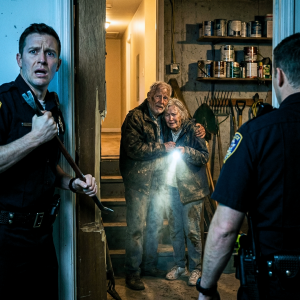
The woman giggled. “And you’ll inherit everything. Easy money.”
My hands trembled, not from weakness, but fury. He thought he’d already buried me. He thought I was powerless.
That night, I clipped a short segment of the video—just enough to show his cruelty—and posted it online. I tagged my attorney, someone I trusted since my parents’ estate settlement years ago. By morning, the video had spread like wildfire.
Calls poured in. My sister sobbed over the phone, friends sent messages of support, and my lawyer’s voice was calm but firm when she said, “Elise, your prenup is ironclad. Infidelity during illness strips him of all claims. The house, the accounts—they’re yours. He gets nothing.”
By noon, Marcus was blowing up my phone. “What did you do? Take it down!” I ignored him. By evening, he appeared at the hotel lobby, alone and frantic. To my surprise, he collapsed onto his knees in front of everyone.
“Elise, please. I’m sorry. I’ll take care of you. Just delete that post, come home. We can fix this.”
Dozens of eyes turned toward us. Phones recorded. I looked down at the man who had once vowed to stand beside me in sickness and in health, the same man who had calculated my death like a business transaction.
“You had a wife who would have walked through fire for you,” I said, my voice steady. “But you threw her into the flames. Now live with the ashes.” And I walked away, leaving him kneeling on the cold marble floor, surrounded by strangers’ stares.
The divorce was swift. The cameras provided undeniable proof, and the prenup sealed his fate. Within weeks, I was back in my own home—the same one he’d claimed as his future kingdom. Marcus, meanwhile, was forced to rent a dingy studio and sell used cars for commission. His reputation crumbled, his mistress vanished the moment the money dried up.

Six months later, my oncologist pronounced me in remission. My hair was sprouting again, and my energy returned. I’d fought cancer and betrayal in the same year—and won both battles. Sometimes I drove past his rundown apartment complex, not out of longing, but as a reminder of what I had survived.
One evening, he sent me a text: I made a mistake. Can we talk? I deleted it without hesitation.
Because here’s the truth: you can’t rebuild a man who discards his wife when she’s ill. You can’t forgive your way out of betrayal. But you can choose yourself, reclaim your dignity, and live a life free of those who mistake your love for weakness.
Marcus had wanted freedom. I gave it to him—permanently. As for me, I found a truer kind of freedom: one rooted in strength, self-respect, and the knowledge that karma doesn’t need interference. It only needs time. And time, ironically, was the one gift Marcus never thought I’d have enough of.