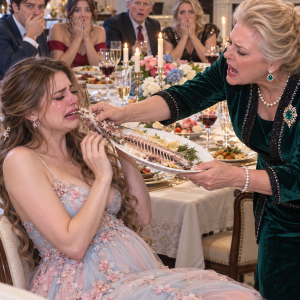
“Clara, they arrested me.”
My mother’s voice was so quiet that I almost didn’t recognize it.
I was standing beside my desk with a folder open in front of me when the call came through. I had spent most of that morning reviewing compliance notes for a federal oversight project scheduled to begin the following week.
Then I heard metal scrape against something on my mother’s end of the line.
“Mom, where are you?”
She took a breath.
“Westbridge Police Department.”
I closed the folder.
“Why?”
There was a pause.
“Brooke hit me with a baseball bat.”
For several seconds, I said nothing.
Brooke was my brother Arthur’s wife.
My mother continued before I could ask another question.
“Arthur was there.”
“Did he call the police?”
Another pause.
“At first.”
That answer bothered me more than anything else she had said.
“What does ‘at first’ mean?”
Her voice dropped.
“He told them I attacked her.”
I picked up my keys.
“Are you hurt?”
“My wrist hurts. My ribs hurt when I breathe. My eye is swollen.”
I was already walking toward the door.
“Have they taken you to a hospital?”
“No.”
I stopped.
“Have they photographed your injuries?”
“I don’t think so.”
That was when the call stopped being only a family emergency.
I worked in military legal affairs and federal compliance oversight. Most of my job was less dramatic than people imagined. Reports. Interviews. Procedure reviews. Evidence logs. Questions about why something was documented one way instead of another.
I knew what a bad investigation looked like.
And I knew what missing steps looked like.
“Mom, don’t argue with anyone. Don’t sign anything you don’t understand. I’m coming.”
“Clara—”
“I’m coming.”
I ended the call.
Six days later, I was supposed to help begin a confidential federal review of the Westbridge Police Department.
My mother didn’t know that.
Almost nobody in Westbridge did.
The Woman in Handcuffs Was the Only Person Who Looked Injured
It took me twenty-eight minutes to reach the station.
I remember the number because I checked the dashboard clock three times.
At the front desk, I gave my mother’s name.
The officer behind the counter barely looked up.
“Domestic disturbance.”
“I’d like to see her.”
“Relationship?”
“Daughter.”
He typed something.
“Have a seat.”
“Has she received medical attention?”
His fingers stopped.
“I don’t have that information.”
“Then please find out.”
He looked at me properly for the first time.
I sat down.
Seven minutes later, an officer opened a secured door and called my name.
My mother was sitting in a small interview room.
Her hands were cuffed behind her chair.
For a moment, I stayed in the doorway.
Helena Reed was sixty-seven years old and still cut her own grass because she hated paying someone for something she could do herself. She volunteered twice a month at the church pantry and carried grocery bags in one trip because making two trips annoyed her.
I had never seen her look small.
She looked small in that chair.
Her left eye was swollen. A dark bruise was beginning to spread along her cheekbone. Her gray cardigan was torn near the shoulder.
That cardigan caught my attention.
I had given it to her two Christmases earlier. She wore it constantly despite owning nicer ones.
One sleeve had been stretched and ripped near the seam.
Her right wrist was swollen above the cuff.
I looked at the officer.
“Take the cuffs off.”
He stiffened.
“Ma’am—”
“Her wrist is visibly injured.”
“She’s being detained.”
“I understand what handcuffs are for. I’m asking why an injured sixty-seven-year-old woman sitting inside a secured interview room still needs them behind her back.”
He stared at me.
Then he left.
My mother looked up.
“I told them my wrist hurt.”
I crouched beside her.
“Did anyone examine it?”
She shook her head.
“Did anyone photograph your face?”
Another shake.
“Did they ask where the bat was?”
She looked confused.
“I told them Brooke left it in the garage.”
The door opened again.
A man in a white command shirt entered.
“Ms. Reed? I’m Captain Thomas Landry.”
I stood.
“Clara Reed.”
We shook hands.
His expression was calm, almost friendly.
“I understand you’re concerned about your mother.”
I looked at her swollen eye.
“Yes.”
Landry pulled out the other chair.
“This appears to have been an unfortunate family altercation. Those situations can become confusing very quickly.”
“Where is Brooke?”
“She’s been interviewed.”
“Is she injured?”
He hesitated.
“She reported being shoved.”
“That wasn’t my question.”
His mouth tightened slightly.
“No significant visible injuries were noted.”
I looked back at my mother.
One swollen eye.
A torn cardigan.
A wrist nearly twice its normal size.
Then I looked at Landry.
“And you arrested her?”
“Based on the statements collected at the scene.”
“Including Arthur’s?”
“Including the parties present.”
That was not an answer.
Captain Landry Called It a Family Matter
The cuffs finally came off.
My mother brought her right arm forward and held it against her stomach.
She didn’t complain.
That worried me.
My mother complained when coffee was weak.
She complained when restaurants put too much ice in water.
Pain had made her quiet.
“I want her evaluated by a doctor.”
Landry nodded.
“We can arrange that.”
“Why wasn’t it arranged at the scene?”
“The responding officers didn’t believe emergency transport was necessary.”
I pointed toward her wrist.
“Did they document that decision?”
Landry leaned back.
“Ms. Reed, I understand you’re upset.”
“I’m asking procedural questions.”
He studied me.
“Are you an attorney?”
“Yes.”
That changed something in his face.
Not much.
Enough.
“What kind?”
“Military legal affairs. Federal compliance work.”
I left it there.
He folded his hands.
“Then you understand officers have to make judgment calls.”
“Of course.”
“They had two witnesses giving consistent accounts.”
“Brooke and Arthur.”
“Correct.”
“And my mother gave a different account.”
“Correct.”
“So what physical evidence supported Brooke’s version?”
Landry’s eyes moved briefly toward the officer standing near the door.
“There wasn’t a weapon recovered.”
My mother looked up.
“I told them where it was.”
Landry turned toward her.
“Mrs. Reed, there was no baseball bat documented at the scene.”
My mother stared at him.
“She hit me with it.”
“Mom.”
She stopped.
I turned to Landry.
“Did anyone search the garage?”
“I’d have to review the incident notes.”
“Did anyone photograph the garage?”
“Again, I’d have to check.”
“Did anyone photograph my mother?”
He didn’t answer immediately.
That was enough.
I took my phone from my purse.
“Mom, may I photograph your injuries?”
Landry sat forward.
“I’d prefer you not interfere with an active investigation.”
I looked at him.
“Photographing my mother’s visible injuries with her consent is not interfering with your investigation.”
My mother nodded.
I photographed her face.
Her torn cardigan.
Her swollen wrist.
The bruising beginning to appear above her ribs.
Four photographs.
Nothing dramatic.
Just what should already have been in the police file.
When I finished, Landry stood.
“I think everyone would benefit from allowing us to handle this through the normal process.”
I put my phone away.
“That’s exactly what I want.”