The Dinner My Mother Took Away

Part One: The Night I Finally Left
For most of my life, I believed that keeping a family together meant learning which arguments to avoid, which disappointments to swallow, and how to smile when someone you loved made you feel smaller than you really were. I had become so practiced at making excuses for my parents and younger sister that I barely noticed how much of my own life I had arranged around their comfort, until one snowy evening in a quiet suburb outside Milwaukee, when my mother took a bowl of homemade soup away from my little girl and poured it into the kitchen sink.
My daughter, Lily, was two years old, and she had spent the afternoon looking forward to dinner at Grandma’s house, where she believed everyone loved her simply because she belonged to them.
We had arrived shortly before five, carrying a small bag of groceries and a loaf of bread I had picked up on the way. I worked as a medical records coordinator at a rehabilitation clinic, and although my salary was modest, I had always made sure that I contributed whenever I visited my parents.
That evening, however, my mother, Patricia, seemed irritated before I had even taken off my coat.
“You really need to stop treating this place like some kind of free restaurant, Emily,” she said while I was helping Lily into her booster seat.
I glanced toward my sister, Brooke, who was sitting at the dining table scrolling through her phone, but she merely shrugged.
“Mom’s been saying it for months,” Brooke remarked. “You’re thirty-one. You should be able to take care of yourself without constantly coming here.”
I wanted to remind her that I had brought dinner ingredients, that I paid my own rent, and that I had never once asked either of them for money, but Lily was already reaching toward the warm chicken soup I had prepared.
Before I could place the bowl in front of her, my mother snatched it from my hands.
“Maybe it’s time you learned that nothing in life comes free.”
She turned toward the sink and emptied the entire bowl, leaving Lily staring at the little curls of pasta disappearing down the drain.
For several seconds, I couldn’t move.
“Grandma?” Lily asked quietly. “My soup?”
My mother didn’t answer.
My father, Richard, had been sitting near the window with a magazine on his lap, and I looked toward him, hoping he would say something, even if it was only to suggest that everyone calm down.
Instead, he stood, walked to the entryway, and pushed Lily’s folded stroller into the unheated building corridor.
“It’s probably best if you two head home,” he said without looking at me.
Outside, snow was falling heavily, and the wind had already covered the sidewalks in white.
I lifted Lily from her chair, wrapped her in her little blue coat, and held her close while she buried her face against my shoulder.
“Come on, sweetheart. We’ll find something good to eat.”
My mother folded her arms.
“Maybe next time you’ll remember that grown women pay their own way.”
I didn’t answer, because something inside me had finally grown too tired to explain itself.
I simply collected our belongings, carried my daughter into the hallway, and closed the door.
For the first time in years, I didn’t feel compelled to go back and make things right.
Part Two: The Secret Behind the Front Door
The drive to the small roadside inn where Lily and I spent that night took almost forty minutes, partly because of the snow and partly because I kept pulling over whenever my eyes filled with tears.
Lily eventually fell asleep in her car seat, clutching a stuffed rabbit, unaware that the people she had trusted so completely had just changed something fundamental about our lives.
After settling her into bed and ordering a warm meal from a nearby diner, I opened my laptop and found a folder I had created several years earlier.
It contained documents my family had apparently forgotten existed.
Six years before that evening, my grandmother had decided to transfer ownership of her two-bedroom condominium to me. She had raised my mother there for several years, and although my parents had continued living in the property after Grandma moved into a retirement community, she had wanted the home to belong to someone who would preserve it.
My parents had agreed to the arrangement, signing the necessary documents with an attorney, and the deed had been properly recorded.
I was the sole legal owner.
Yet my parents continued behaving as though the condominium belonged entirely to them, and because I had never wanted money or property to become a source of conflict, I allowed them to stay without paying rent.
There was another secret, one that concerned Brooke.
Five years earlier, when she purchased a townhouse in a neighboring suburb, she had struggled to qualify for the monthly payments she had confidently promised she could manage. I had quietly agreed to contribute $1,200 every month until she became financially stable.
Somehow, that temporary arrangement had become permanent.
Brooke drove a newer vehicle than I did, took expensive vacations, and regularly described herself as financially independent, while I continued transferring money into the account she used for her mortgage.
I had never exposed the arrangement because I believed protecting her dignity was part of being a good sister.
That night, however, as I reviewed the documents, I noticed an unfamiliar message in an old family email account that remained connected to my computer.
The subject concerned a proposed property transaction.
Attached was a draft agreement showing that my mother and Brooke were arranging to sell the condominium to a development company associated with Brooke’s fiancé, Nathan.
My name appeared on the ownership documents, but I had never agreed to a sale.
Then I found a message from Brooke suggesting that my mother could simply sign the paperwork on my behalf.
I read it several times, hoping I had misunderstood.
They weren’t merely treating me as an inconvenience.
They were preparing to dispose of the one substantial asset my grandmother had entrusted to me.
I looked across the room at Lily, sleeping beneath a faded quilt, and understood that the kindness I had offered my family had become something they believed they were entitled to take.
The following morning, I canceled Brooke’s automatic mortgage payment.
Then I called an attorney.
Part Three: The Signature My Father Had to Give

Margaret Ellis was a property attorney in downtown Milwaukee whose office overlooked a narrow street lined with bare maple trees.
She listened carefully while I explained the history of the condominium, then examined the recorded deed, financial records, and proposed purchase agreement.
“Emily, the important thing is that we act before anyone attempts to record a fraudulent transfer,” she told me. “Your ownership is documented, but we need to protect the title and address your parents’ right to occupy the property through the proper legal process.”
She explained that the original transfer appeared valid, although my mother might attempt to challenge it by claiming that my father had misunderstood the documents he signed.
Because my father had been involved in the original transaction, Margaret suggested obtaining a fresh sworn statement confirming that he had participated voluntarily.
It would not guarantee the outcome of any dispute, but it could help establish the history of the property.
“Do you think he’ll cooperate?” she asked.
I stared at the papers on her desk.
“My father has spent most of his marriage agreeing with my mother because it’s easier than disagreeing.”
Margaret gave me a sympathetic look.
“Then you may have to explain what his silence is costing you.”
I planned to visit him that afternoon at the community workshop where he volunteered repairing bicycles for local children.
Before I arrived, however, my phone rang.
It was Mrs. Dawson, an elderly neighbor who had lived across the hall from my parents for nearly twenty years.
“Emily, sweetheart, your father’s been taken to the hospital,” she said. “Your mother was terribly upset about some money, and they had a big argument. He became dizzy and complained about his chest, so I called for help.”
I turned my car toward the hospital.
Related Posts

“Come Give Daddy A Hug.” My Husband Said As He Opened His Arms To Our Two-Year-Old Daughter After Eleven Days Spent Busy On Vacation With His Mistress. She Stayed Seated On The Floor And Looked At Him. “I Was Sick.” He Whispered, “I Know, Sweetheart.” Then She Said The Four Words He Couldn’t Escape: “You Were Not Here.”

At My Brother’s Navy SEAL Ceremony, My Mother Forced Me Into the Back Row While My Father Called Him “The Only Successful Child in Our Family.” My Brother Whispered, “Don’t Embarrass Me Today.” I Stayed Silent—Until, Just 10 Minutes Later, an Admiral Presumed Dead for 12 Years Stopped the Ceremony, Walked Straight Toward Me, and Saluted. When He Called Me “Commander,” My Entire Family Went Pale—and the Truth Behind My 16 Years as the “Family Failure” Was Finally Revealed
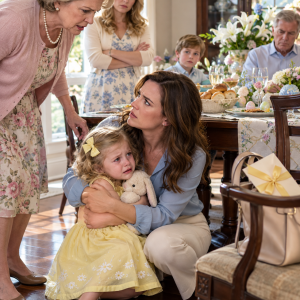
At Easter Dinner, My Mother Dragged My 4-Year-Old Daughter Away From the Table While My Sister Said, “She’s Not Really Family.” They Still Expected Me to Hand Over the $180,000 Gift That Could Save Their Home—Until My 8-Year-Old Nephew Sent Me a Photo of the Note Beside Mom’s Plate… and by Monday Morning, Their Plan for the House Was Already Beginning to Fall Apart.

“Stay Home and Wash the Dishes. I Need a Woman Who Matches My Success,” My Husband Said Before Taking His Mistress to a Luxury Gala. His Mother Laughed, and His Sister Mocked Me Like I Was a Servant. But Hours Later, When the Host Announced My Name as the Secret Chairwoman of the Investment Firm Funding His Entire Business, My Husband Turned Pale. And That Was Only the Beginning—He Had No Idea What I Was About to Take Away From Him