My Mother-in-Law Took the SUV I Paid For and Left Me Walking Home With My Baby—Then My Father Arrived
For months, I convinced myself that I could handle everything.
Then one afternoon, I found myself limping along a quiet road outside Fayetteville, North Carolina, pushing my ten-month-old son in his stroller while two grocery bags cut into my hands.
My ankle was swollen. My son, Caleb, was tired and restless.
And the SUV I made payments on every month was sitting somewhere else because my mother-in-law had decided she needed it more than I did.
A dark SUV slowed beside me.
At first, I barely looked up.
Then the passenger window came down.
My father stared at me from behind the wheel.
“Mallory?”
I stopped walking.
His eyes moved from the grocery bags to the stroller, then down to my ankle.
“Where is your car?”
That simple question nearly broke me.
Because for the first time in months, someone had looked at my situation and immediately understood that something was wrong.
Six Months of Making Myself Smaller

My husband, Derek Holloway, had lost his job six months earlier.
Until then, we had lived in a modest apartment outside Fayetteville and managed our bills without much trouble. Losing his income changed everything quickly.
Derek’s mother, Cynthia, offered us the guest rooms in her large suburban home.
At first, I was grateful.
I believed it would be temporary.
I also believed family helped family.
But temporary arrangements have a strange way of becoming permanent when one person controls the house, another avoids difficult conversations, and everyone expects the quietest person to keep adjusting.
I was that person.
My paycheck began covering more of the household expenses.
Then Cynthia started using our SUV.
Then she began questioning what I bought at the grocery store.
Soon she wanted to know why Caleb needed a particular brand of diapers, why I ran the washing machine twice in one day, and why I sometimes kept a hallway light on after everyone had gone to bed.
Every objection I made received the same response from Derek.
“Just give Mom some time.”
Or:
“We’re living in her house, Mallory.”
So I kept giving everyone time.
Eventually, I stopped noticing how much of myself I was giving away with it.
The Afternoon My Father Found Me

My father, Raymond Ellis, parked and came around to me.
He was sixty-two, broad-shouldered, silver-haired, and unusually calm.
He had always been that way.
People sometimes mistook his quietness for softness.
They were rarely correct.
He took the grocery bags from my hands.
“What happened to your ankle?”
“I stepped badly off a curb yesterday.”
His eyes narrowed.
“And you’re walking on it?”
I tried to smile.
“The bus route changed.”
He looked at Caleb.
Then at me.
“Where is the SUV?”
I hesitated.
That was enough.
“Mallory.”
I looked away.
“Cynthia took it.”
“Does Derek know?”
I nodded.
My father’s expression barely changed.
“Get in.”
That was all.
No lecture.
No criticism.
No question about why I had allowed things to reach this point.
He simply opened the passenger door.
Once Caleb was safely secured in the child seat my father kept for him, Dad started driving.
After several minutes, he asked quietly, “Do you still have control of your own money?”
I stared out the window.
“Mostly.”
His hands tightened slightly around the steering wheel.
“What does ‘mostly’ mean?”
I explained that Derek knew my banking password. Cynthia had also insisted that because we were living in her house, we should contribute significantly toward expenses.
“How significantly?”
I swallowed.
“Around twenty thousand dollars over the last six months.”
Dad glanced at me.
“And you’re still making the SUV payments?”
“Yes.”
“Insurance?”
“Yes.”
“And Cynthia took it today?”
I nodded.
My father said nothing else until we reached the house.
The Conversation at the Front Door
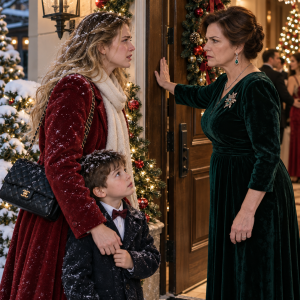
Cynthia opened the door before we reached the porch.
She looked irritated rather than concerned.
“Where have you been?”
My father was carrying Caleb.
I was limping beside him.
Yet Cynthia’s first question was about why I had been gone so long.
“Getting groceries,” I said.
“For three hours?”
“The bus changed routes.”
Dad looked at her.
“Where is Mallory’s SUV?”
Cynthia blinked.
“Excuse me?”
“The SUV.”
She folded her arms.
“It’s in the garage.”
“Good.”
Dad stepped toward the doorway.
“Mallory is collecting some things.”
Her expression immediately changed.
“What things?”
Derek appeared behind her, phone in his hand.
“Mallory? What’s happening?”
Dad looked at him.
“Your wife injured her ankle.”
Derek looked down.
That hurt more than anything Cynthia had said.
He was noticing my swollen ankle for the first time.
I had told him about it the previous evening.
He had forgotten.
Dad continued.
“I found her walking home with your son and groceries because she didn’t have access to the vehicle she pays for.”
Derek sighed.
That sigh told me more than any argument could have.
“It’s complicated.”
Dad nodded.
“Then explain it.”
The Questions Nobody Wanted to Answer
Cynthia immediately began telling my father how much she had done for us.
She talked about utilities.
Food.
Housing.
Insurance.
Everything except the money I had given her.
So Dad asked.
“Mallory, approximately how much have you contributed since moving here?”
My face grew warm.
“A little over twenty thousand.”
Cynthia stared at me.
Dad turned toward her.
“Is that incorrect?”
She didn’t answer.
Then he asked about the SUV.
“Who makes the payments?”
Silence.
Derek finally said, “Mallory.”
“Who pays the insurance?”
“Mallory.”
“Who provided most of the original down payment?”
Derek lowered his eyes.
“Mallory.”
Dad nodded.
“Then why was she walking?”
Cynthia stepped forward.
“Because this is my house, and sometimes I need the vehicle.”
Dad’s voice remained calm.
“Your house. Not your vehicle.”
She looked furious.
“It’s registered under Derek’s name.”