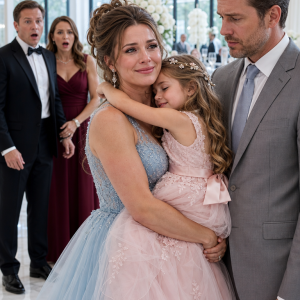
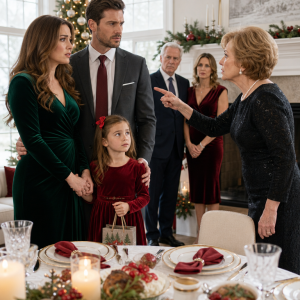
Her face looked older than it had a few months earlier.
“We were afraid of her,” she said.
For the first time, she did not call what happened an accident.
I looked at her.
“So was Sophie.”
My mother covered her mouth.
“We believed we could manage Marissa.”
“You managed everyone except the person causing the problems.”
She asked whether I could ever forgive them.
I told her forgiveness was not the real question.
Access was.
My parents had spent years believing family membership could never be taken away, regardless of what they excused.
They believed an apology automatically reopened every closed door.
They believed being Sophie’s grandparents gave them a permanent claim to her life.
It did not.
The Cost of Protecting the Wrong Person
The case ended several months later through negotiated agreements after the evidence became impossible to deny.
Marissa accepted responsibility for the kitchen incident, the threatening messages, and the misuse of Sophie’s money.
Her sentence included time away from the family, financial repayment, and strict no-contact restrictions.
My parents also admitted responsibility for financial wrongdoing connected to Sophie’s trust.
They lost all authority over the account and were prohibited from managing trusts or acting as financial guardians in the future.
An independent professional was appointed to protect the recovered funds.
A civil judgment placed claims against my parents’ house and Marissa’s remaining property.
Eventually, the large white house where I had spent my childhood was sold.
My father’s carefully organized workshop was cleared out.
My mother moved into a small apartment across town.
The relatives who had accused me of destroying the family became quieter once the court records revealed where Sophie’s money had gone.
A few apologized.
Most simply stopped calling.
Learning to See the World Differently
Sophie’s recovery did not follow the simple shape people prefer in inspirational stories.
There was no single procedure that restored everything.
There were headaches, restless nights, balance problems, and mornings when she became frustrated because stairs looked different or a bouncing ball seemed closer than it really was.
She disliked her first pair of protective glasses.
“They make me look strange,” she said.
A boy in her class told her they looked like superhero glasses.
After that, she wore them every day.
She returned to drawing before she returned to running.
At first, she turned the paper at unusual angles and became upset when lines did not meet where she expected.
An occupational therapist showed her new ways to judge distance.
Her teacher moved her desk.
Her classmates learned not to approach suddenly from her left side.
Little by little, the world became easier for her to navigate.
Nearly a year later, Sophie brought home a picture she had drawn.
It showed two people standing beside a large purple house.
One figure wore a yellow dress.
The other had long brown hair and held a folder.
“That’s us,” Sophie said.
“What is inside the folder?”
She smiled.
“The truth.”
I had never used that word when discussing the investigation with her.
But children understand far more than adults realize.
I framed the picture and hung it in our hallway.
The Letters I Never Gave Her
My mother continued to send letters.
Some contained sincere apologies.
Some tried to explain how frightened she and my father had been of Marissa.
Others slowly returned to excuses, describing themselves as trapped and insisting they had only wanted to keep the family together.
I saved the letters because my attorney advised me to keep everything.
I did not give them to Sophie.
My father sent one message on her seventh birthday.
Please tell Sophie that Grandpa loves her.
I did not pass that message along either.
Love is not only what someone says they feel.
Love is what they choose when protecting another person costs them comfort, money, reputation, or peace.
My parents had chosen Marissa’s approval over Sophie’s safety.
They had chosen silence while my daughter needed them.
Their sadness afterward could not erase those choices.
The Chocolate Cake
On Sophie’s eighth birthday, she surprised me by asking for chocolate cake.
“Are you sure?” I asked.
She nodded.
“Chocolate with raspberry in the middle.”
We ordered one from a small bakery near our home.
When I placed it on the table, Sophie studied the glossy frosting for several seconds.
Then she picked up the cake knife and carefully cut the first slice herself.
She placed it on my plate.
“This one is yours.”
“Why do I get the first piece?”
She smiled behind her protective glasses.
“Because sharing is not stealing.”
For two years, I had believed chocolate cake would always belong to the worst afternoon of our lives.
With one sentence, Sophie made it hers again.
We ate together at a table with no hidden cameras, no whispered agreements, and no rule demanding that we protect someone who had caused harm.
Sophie still carried visible reminders of what happened.
She still turned her head slightly when she wanted to see something clearly.
Some losses could not be reversed.
But Marissa had not taken away her kindness.
My parents had not taken away her future.
And the people who once demanded our silence no longer had the power to decide what family meant.
Family should never be used as an excuse to hide the truth, because real love protects the most vulnerable person in the room instead of protecting the reputation of the person who caused the pain.
A child who asks whether she is in trouble after being treated unfairly needs more than comforting words; she needs adults who will prove through their actions that her safety matters more than family peace.
Silence may appear to preserve a family for a little while, but when that silence protects dishonesty, manipulation, and fear, it slowly destroys every relationship it was meant to save.
Forgiveness can be meaningful, but it does not automatically restore trust, reopen closed doors, or give someone unlimited access to the people they once failed to protect.
Love is not measured only by affection, tears, apologies, or promises; it is measured by the choices people make when doing the right thing requires sacrifice.
Children may not understand every legal document, financial record, or adult explanation, but they always remember who believed them, who stood beside them, and who made them feel safe again.
Setting boundaries with relatives is not an act of cruelty when those boundaries are necessary to protect a child’s health, dignity, emotional well-being, and future.
The truth can feel disruptive when it first comes into the light, but the damage was not created by the person who revealed it; the damage began with the choices that made secrecy necessary.
Recovery does not always mean returning to the person someone was before a painful experience, because sometimes recovery means learning new ways to live with courage, confidence, and hope.
The strongest families are not the ones that never face painful truths, but the ones that refuse to sacrifice an innocent person simply to preserve appearances.