The Bed I Gave Away

On the evening I married Caleb Pierce, I believed the most difficult part of the day was finally behind me. My cheeks ached from smiling through photographs, my feet throbbed inside satin shoes I had chosen for beauty rather than comfort, and the pins holding my hair in place had begun pressing sharply against my scalp, yet I felt strangely peaceful because, after months of planning and years of uncertainty, I was finally alone with the man I had trusted enough to call my husband.
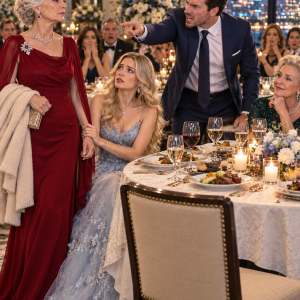
Our wedding had taken place at his family’s country home outside Asheville, North Carolina, an elegant white house surrounded by old maple trees and gardens his mother tended with almost military precision. Late-summer flowers lined the porch, white ribbons moved gently in the evening breeze, and strings of lights glowed above the lawn where our guests had spent the afternoon eating, dancing, and telling us how fortunate we were to have found each other.
Most of them had already left, although several relatives remained downstairs, drinking coffee and finishing slices of wedding cake. Their laughter rose faintly through the floorboards while Caleb stood near the window loosening his tie, and for one tender moment, as I watched his reflection in the glass, I allowed myself to believe that the small disappointments I had overlooked during our engagement no longer mattered.
His mother, Diane, had always been possessive, but Caleb had assured me that marriage would establish new boundaries. He said she was lonely, that raising him alone had made it difficult for her to step back, and that I should not mistake her anxiety for hostility. Because I loved him, I had accepted explanations that now seemed less like reasons and more like warnings I had chosen not to hear.
I had just removed my earrings when the bedroom door opened without a knock.
Diane entered carrying a pillow against her chest. Her silver-blond hair, normally arranged with meticulous care, had fallen slightly across her forehead, and she walked with a slow, uneven step. The strong smell of wine reached me before she did, yet her eyes remained clear, focused, and far too observant for someone who could supposedly barely stand.
“Nora, it’s much too noisy downstairs,” she said, pressing one hand against the doorframe. “I need to lie down somewhere quiet. Let me rest here tonight.”
For several seconds, I assumed she was joking. Three guest rooms were available, and the house had an upholstered daybed in the library, but when I turned toward Caleb, expecting him to guide her away, he gave me the familiar apologetic expression he always wore when his mother asked for something unreasonable.
“She’s had too much to drink,” he murmured. “Let her stay here, sweetheart. It’s only one night.”
I looked from him to Diane, waiting for either of them to recognize how inappropriate the request was.
“It’s our wedding night,” I reminded him quietly.
Caleb glanced toward the hallway as though my objection embarrassed him.
“Please don’t make this into a family argument. Mom isn’t feeling well.”
Diane lowered her eyes, performing the role of the fragile mother who did not wish to become a burden, although the slight curve at the corner of her mouth suggested that she already knew which of us Caleb would choose.
I had been married for less than six hours, and I did not want to become the bride relatives whispered about before the flowers had even been cleared from the tables. More than that, I did not want to confront the possibility that my new husband was willing to remove me from our room simply because his mother wanted my place.
So I picked up a spare pillow and carried it downstairs.
Before leaving, I looked back one final time. Diane was no longer swaying. She stood perfectly straight beside the bed, watching Caleb with an expression that seemed less like gratitude than possession. It was as though my marriage had not welcomed me into her family but had taken from her something she believed belonged exclusively to her.
The sofa in the downstairs sitting room was narrow and firm, and the noise Diane had complained about faded within twenty minutes. I lay awake beneath a thin blanket, listening to the house settle around me, wondering why Caleb had not come downstairs to apologize or suggest that we find another room together.
He never came.
The Mark Beneath the Sheets
I slept for less than two hours and woke shortly before sunrise, when pale gray light was beginning to gather at the windows. My neck ached from the position of the pillow, and one side of my face still carried faint impressions from the embroidered cushion beneath it.
Several of my relatives had planned to leave early, so I went upstairs to wake Caleb before they departed. The hallway was quiet, and the bedroom door stood partly open.
When I pushed it wider, I stopped.
Caleb lay on his back beneath the cream-colored comforter, while Diane rested beside him under the same sheets I had surrendered only hours earlier. They were not merely sharing the bed. She was positioned close enough that her head nearly touched his shoulder, and one of her hands rested on the blanket between them.
I told myself there had to be an innocent explanation. Perhaps Diane had fallen asleep first, and Caleb had been too exhausted to move her. Perhaps he had entered later and kept to the far side. Perhaps the angle from the doorway made them appear closer than they were.
I approached carefully, hoping that proximity would make the scene less troubling, but instead, I noticed a dark reddish-brown mark near the center of the mattress.
It was roughly the size of my palm, irregular around the edges, and partly hidden beneath a fold in the top sheet. When I touched one corner, I discovered that the material was still slightly damp. It did not smell like wine, makeup, candle wax, or anything else that might reasonably have spilled during the wedding.
A chill moved slowly across my shoulders.
Diane’s eyes opened almost immediately, so quickly that I wondered whether she had been awake the entire time.
“Oh, you’re up,” she said, pulling the blanket higher. “I haven’t slept that well in years.”
Her voice was bright, her speech perfectly clear, and there was no trace of the unsteadiness she had displayed the night before.
I looked toward Caleb.
His eyes remained closed, but his breathing was too uneven to belong to a sleeping man. He knew I was standing there, and still, he offered no explanation, no apology, not even the courtesy of turning toward me.
“Caleb?”
He shifted slightly but did not open his eyes.
Diane smiled as she sat up.
“Let him rest, Nora. Yesterday was exhausting for all of us.”
The ease with which she dismissed me was almost more unsettling than the sight of them together. I stepped away from the bed, gathered my clothes, and changed in the guest bathroom without saying another word.
Throughout breakfast, Diane behaved as though nothing unusual had happened. She hugged departing relatives, praised the florist, and laughed about how little she remembered after the reception. Caleb avoided looking at me, yet whenever I caught him watching from across the room, his expression held neither guilt nor confusion. It held calculation.
Later that afternoon, I returned to the bedroom and discovered that the sheets had been removed. I eventually found them buried beneath towels at the bottom of the laundry basket. Someone had rinsed the mysterious mark but had not succeeded in removing it completely.
I stood alone in the laundry room, holding the damp fabric between my fingers, while the happiest weekend of my life quietly changed its shape.
Until then, I had believed marriage meant entering a shared future. In that moment, it felt as though I had entered a room whose lock was controlled by someone else.
The Message on His Phone

The following evening, Caleb showered while I sat near the dresser pretending to sort wedding cards. We had barely discussed the night before. Whenever I asked why he had stayed in the bed with Diane, he offered vague explanations about exhaustion and accused me of making an uncomfortable situation seem improper.
“Nothing happened,” he said. “Mom needed help. That’s all.”
I wanted to believe him because accepting the alternative would mean admitting that I had misjudged the person closest to me. Trust, I learned that weekend, does not disappear all at once. It argues with evidence, rewrites troubling memories, and begs for one final explanation even when the truth is already standing in the room.
Caleb’s phone lit up on the dresser.
I had never searched his private messages, but the preview displayed my name, followed by a sentence that made my hands go cold.
“Nora found the sheet. Tomorrow we begin the second stage.”
The message had come from Diane.
Beneath it was a photograph of me asleep on the sofa, curled beneath the thin blanket, one hand tucked under my cheek. The picture had been taken from only a few feet away, which meant that sometime during the night, one of them had stood over me while I slept.
I listened to the shower running behind the bathroom door and forced myself not to panic. If I confronted Caleb then, he could erase everything and insist I had misunderstood.
Instead, I photographed the screen with my own phone and began searching the conversation for my name.
Dozens of messages appeared. Some were ordinary discussions about groceries, guest lists, and wedding expenses, yet hidden among them were conversations that revealed how carefully they had studied me.
“She still believes the house is protected.”
“Don’t pressure her before the wedding.”
“Once she is isolated, she’ll be easier to manage.”
“Her father taught her never to add anyone to the deed.”
The house had belonged to my father, Walter Whitfield, who had passed away two years earlier after a sudden medical emergency. He had raised me alone from the time I was twelve, and although he had never been a wealthy man in the way people imagined wealth, he had spent decades restoring the farmhouse, purchasing neighboring acres, and building a disciplined investment portfolio through careful work and modest living.
Before his passing, he had taken my hands across his study desk and given me one piece of advice.
“Never surrender something important merely to prove that your love is real. Anyone who truly loves you will never demand that proof.”
Caleb knew about that conversation. During our engagement, he had repeatedly assured me that the property did not matter to him.
“I’m marrying you, Nora,” he had said. “Not your house, not your accounts, and not your family name.”
His messages told a different story.
Three months before the wedding, Diane had written, “If she refuses to sign, we’ll have to make people question whether she can manage things herself.”
Caleb’s reply had been brief.
“She trusts me. Give me time.”
Another message referred to a man named Martin Voss.
“Voss says witnesses matter more than one document. Family concern must appear genuine.”
The shower stopped.
I immediately returned the phone to its original position and sat at the vanity, slowly removing my necklace. When Caleb came out, he studied me for several seconds, and I wondered whether he could hear my heart pounding.
“Everything all right?”
“I’m exhausted.”
His shoulders relaxed.
“It’s been an overwhelming couple of days.”
He bent down and kissed my forehead. I had loved that small gesture throughout our relationship, but now his touch felt rehearsed, as though affection had become another instrument he knew how to use.
That night, after his breathing deepened, I slipped downstairs and emailed the photographs to my college friend Tessa Hale, who worked as an investigator with a financial-crimes unit in Raleigh.
Her response arrived almost immediately.
“Where are you?”
“At Diane’s house.”
“Leave now. Take your documents and go somewhere they can’t find you.”
I stared at her message until the words blurred.
“I need proof.”
“You already have enough reason to protect yourself.”
She was right, but disbelief held me in place. I wanted evidence strong enough that Caleb could not call the messages jokes or accuse Diane of exaggerating. I wanted something undeniable because a small, wounded part of me still hoped that the marriage I had believed in could somehow be separated from what I had found.
So I stayed.
It was a dangerous decision, though it eventually gave me the evidence they never expected me to collect.
The Woman They Invented
The following morning, Diane prepared breakfast with theatrical cheerfulness. Sunlight filled the kitchen, wedding flowers stood in vases along the windowsill, and the scene looked so ordinary that I began to understand why people like her were difficult to expose. She did not appear calculating. She appeared helpful, composed, and deeply concerned about everyone around her.
“Eat something,” she said, placing a plate of eggs and toast in front of me. “You’ve hardly touched a meal since the wedding.”
“I’m not hungry.”
Her eyes remained on me.
“You look pale.”
“I’ll make tea.”
I used bottled water from my suitcase rather than the pitcher on the counter. Caleb watched me closely, while Diane’s smile tightened for only a moment before returning.
Two hours later, she entered the sitting room and announced that my aunt Lydia had called.
“She said you sounded confused.”
I lowered the book I had been pretending to read.
“I haven’t spoken to Aunt Lydia today.”