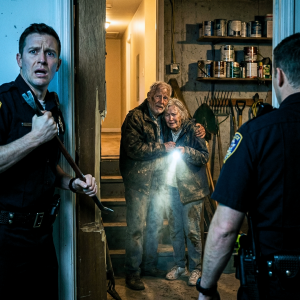
A warrant was issued that same night. Investigators searched every room of the house and uncovered what they feared—hidden recording devices, journals, and evidence of ongoing abuse. The discovery confirmed years of torment buried behind closed doors.
At the police station, Thomas denied everything, insisting it was a misunderstanding. When detectives showed him the evidence, he went silent. His expression shifted from arrogance to terror. He muttered incoherent excuses until the interview ended.
The district attorney filed charges for multiple counts of assault and possession of illegal material. The town’s quiet streets buzzed with disbelief. Neighbors who once waved at Thomas from their lawns now avoided even looking at his boarded windows.

Meanwhile, Ava began a slow recovery under the care of a foster family led by a woman named Margaret Duvall. Margaret had cared for children who had faced unthinkable things, yet Ava’s fear cut deeper than most. The little girl woke up crying at night and refused to sleep with the door closed. Margaret would sit by her bedside and whisper, “You’re safe, my darling. Nobody will ever hurt you again.”
Therapists used drawings and gentle games to help Ava express herself. Gradually, she began to paint bright skies, trees, and police cars. One day she showed Margaret a picture of two officers standing beside a smiling child. “They saved me,” she said.
Months later, Thomas Whitaker’s trial began. The courtroom was filled with reporters, social workers, and members of the community who wanted to see justice served. The prosecutor played the 911 recording, the fragile voice of a child echoing through the room. Several jurors wiped away tears.
When Ava was called to testify, the judge allowed her to hold a small teddy bear for comfort. Her voice trembled at first but grew stronger with each word. “I told the truth,” she said. “Because I didn’t want him to hurt me anymore.”
After long hours of testimony and undeniable evidence, the jury reached a unanimous verdict. Guilty on all counts. Thomas Whitaker was sentenced to life imprisonment with no chance of parole.
As the verdict was read, Margaret wrapped her arms around Ava. Tears fell freely, but this time they were tears of relief.
Years passed, and Ava continued to heal. She learned to smile again and dreamed of becoming a nurse like Rebecca, the woman who first held her hand in the hospital. During an interview years later, she said, “I want to help kids the way people helped me.”
The call that began in fear had led to freedom. The little girl who once whispered for help now spoke with courage. Her voice, once trembling with pain, carried the power of survival.
And though the story started with darkness, it ended with hope, the kind of hope that reminds the world that even in its ugliest moments, light can still find a way through.