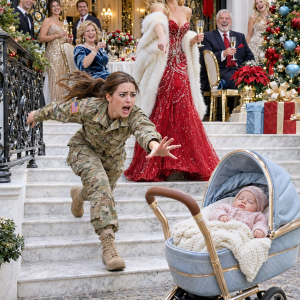
Less than an hour after I shared our photograph, my mother began calling repeatedly, but I was too busy enjoying the evening to answer.
It wasn’t until Molly was asleep and the last of our guests had gone home that I finally learned what had happened.
What Happened at My Mother’s Dinner Table

My aunt Dorothy, a retired middle school counselor who had always possessed a remarkable ability to recognize insincerity, called shortly after nine that evening.
“Rebecca, I think you should know why your mother’s been trying to reach you.”
Dorothy explained that the dinner had been uncomfortable from the beginning, with my mother repeatedly praising the evening’s sophistication while Richard attempted to impress the two executives from his firm.
When our photograph appeared in the family conversation, my mother made a dismissive remark about my gathering, suggesting that I was surrounding myself with strangers because I couldn’t manage my own child’s behavior.
My father agreed, and Vanessa added that Molly would probably have interrupted the twins’ piano performance.
Dorothy had finally heard enough.
In front of everyone, she opened the messages I had forwarded and read aloud the announcement excluding Molly from Thanksgiving. She then explained that my mother had expected me to cover the $4,850 catering expense despite refusing to welcome my daughter.
One of Richard’s senior colleagues, Mr. Bennett, listened with particular concern.
As it happened, his seven-year-old grandson also had ADHD, and he was deeply troubled by the family’s attitude toward a child whose behavior resembled that of his own beloved grandson.
According to Dorothy, he placed his napkin beside his plate and addressed Richard directly.
“I’ve always believed that a person’s character is reflected in how they treat people who have nothing to offer them professionally. I’m disappointed by what I’ve heard tonight, Richard, and I think we need to reconsider some things when we return to the office.”
He excused himself shortly afterward, and the second executive followed.
The country club representative also departed after Vanessa inadvertently revealed that several of my mother’s membership expenses had been paid through my account.
By the time Dorothy and her husband, Frank, collected their coats, my parents were arguing about money, Richard was anxiously checking his phone, and Vanessa was trying to persuade everyone that I had deliberately created the situation.
“I told your mother that Thanksgiving should never have been about impressing important guests at the expense of a little girl’s feelings,” Dorothy said. “Frank and I would love to celebrate with you next year, if you’ll have us.”
I thanked her, particularly for defending Molly when I wasn’t there to do it myself.
The following morning, Vanessa called to explain that Richard had been placed on administrative leave while his company reviewed concerns about his professional expenses and financial conduct.
She admitted that they were struggling with substantial household debt and might have difficulty covering the twins’ upcoming school tuition.
My mother’s country club membership had also been suspended over outstanding payments, and my father had temporarily moved into a hotel after discovering the extent of their financial problems.
“Please, Rebecca,” Vanessa pleaded. “Withdraw the dispute and tell Dorothy everything was a misunderstanding. We need your help. We’re your family.”
I listened until she finished.
“Vanessa, you’ve told me about Richard’s job, your house, the school tuition, and Mom’s country club. But you haven’t asked how Molly is doing.”
There was a long silence.
“When you’re ready to acknowledge what you did to her, we can have another conversation. Until then, I’m not discussing money with you.”
I ended the call and returned to my morning chores, feeling strangely peaceful.
A few hours later, my mother appeared at my front door.
This time, she hadn’t come to demand anything.
An Apology Was Only the Beginning
My mother looked considerably different from the woman who had stood in my living room holding the catering invoice two evenings earlier. Her hair was loosely tied back, her face showed the unmistakable signs of a sleepless night, and she was carrying a plain white envelope.
“I’ve brought you a check,” she said quietly. “It’s for the purchases I made over the past few months. I took the money from my savings.”
I accepted the envelope but remained standing in the doorway.
She explained that my father was furious with her, Vanessa was refusing to speak to her, and several women she had considered close friends were no longer returning her calls.
“I’ve spent my whole life trying to build something respectable,” she whispered. “Now I feel as though I’ve lost everything.”
For a moment, I saw not the demanding woman who had shaped so much of my childhood, but an aging mother who had invested decades in earning the approval of people who disappeared as soon as her circumstances changed.
I felt compassion for her, although that compassion no longer required me to excuse her choices.
“Mom, having a respectable family isn’t about the quality of your furniture, the people you invite to dinner, or how well your grandchildren perform in front of guests. It’s about making the people you love feel safe and valued.”
Her eyes filled with tears.
“I’m sorry about the message, Rebecca. I shouldn’t have written it. Can I see Molly and apologize?”
I considered her request carefully.
“Not yet. She needs time, and I need to know that you’re apologizing because you understand how you hurt her, not because you’re lonely or because things have become difficult.”
My mother nodded slowly.
For once, she didn’t challenge my decision.
Before leaving, she admitted that she had spent much of her own childhood trying to satisfy a demanding mother and had never really learned how to separate affection from achievement.
It was the closest she had ever come to explaining herself, and although it didn’t undo the past, I hoped it might eventually become the beginning of something better.
In the weeks that followed, Richard left his firm and accepted a less prestigious position in another state, while Vanessa began preparing their house for sale.
My father eventually returned home, but my parents were left with difficult conversations about their finances, their marriage, and the values they had spent so many years defending.
I didn’t celebrate their difficulties, nor did I wish for them to suffer. I simply stopped assuming responsibility for problems I hadn’t created.
Meanwhile, Molly seemed to rediscover a part of herself that had gradually disappeared during our years of uncomfortable family gatherings.
Her teacher mentioned that she was participating more confidently in class, and at home, she no longer interrupted her own stories to ask whether she was talking too much.
When Christmas arrived, we extended our dining table again.
Peter and Susan brought matching pajamas for the children, Stephen helped everyone assemble a wonderfully crooked gingerbread house, Mrs. Whitaker prepared warm apple cider, and Andrew arrived with his parents.
Aunt Dorothy and Uncle Frank sat proudly beneath the paper decorations Molly had made especially for them.
On New Year’s Eve, while we watched fireworks from our back porch, Molly slipped her hand into mine and rested her head against my arm.
“Mom, I used to think being good meant making Grandma happy all the time,” she said thoughtfully. “But I think I can be good and still be myself.”
I bent down and kissed her forehead.
“Of course you can, sweetheart. Being kind matters, learning matters, and treating people with respect matters. But you should never have to give up who you are just to earn someone’s love.”
She smiled and returned her attention to the colorful sky.
Looking through the window at the people gathered inside our home, I realized that I had spent years trying to preserve a family tradition without asking whether that tradition was preserving the things a family should stand for.
I still believed in family, in forgiveness, in generosity, and in honoring the people who raised us, but I had finally learned that none of those values required me to stand quietly while my daughter questioned her own worth.
A beautiful Thanksgiving table could be purchased with enough money, but the warmth surrounding ours had come from something no credit card could provide.
It came from people who pulled out an extra chair without hesitation, who listened when a little girl had something to say, and who understood that the greatest privilege of belonging to a family was never having to prove that you deserved a place in it.