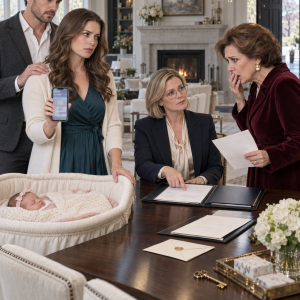
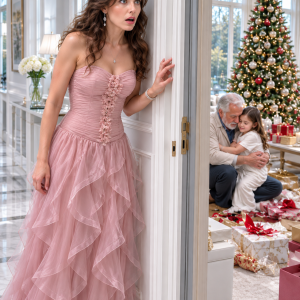
“Fine. If you want to play this game, sign these and walk out. You get nothing.”
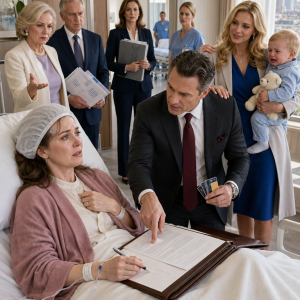
They were separation papers with yellow tabs marking every place my signature belonged. The speed with which he produced them told me the decision had been made long before that afternoon.
Then he rested a hand on Sloane’s shoulder.
“Maisie stays with me. Sloane and I are attending the Northwest Civic Foundation gala tonight, and we already promised the committee she’d present the flowers onstage.”
Maisie tightened her arms around my waist.
I read enough to understand that the papers were cruelly one-sided and unlikely to survive careful legal review. Then I signed my full name: Abigail Reed Vale.
Preston glanced at the final page but missed the name that should have warned him.
“You seem very sure that tonight belongs to you,” I said.
“It does,” he replied. “That room is where the people who matter make decisions.”
“For once, we agree.”
Twenty minutes later, Samuel arrived with a child-care specialist. I carried Maisie outside with only her coat and favorite stuffed rabbit.
As the Vale house disappeared behind us, Maisie stared down at her shoes.
“Is Daddy upset because I’m bad?”
I pulled her close. “No. You are not responsible for the choices adults make. Your father’s failure to protect you belongs to him, not to you.”
She was too young to understand every word, but she understood the arms around her.
The Room Where Everyone Was Watching

My father’s physicians examined Maisie privately and confirmed that she needed rest, reassurance, and time. By early evening, the visible redness had softened, although her usual brightness had not returned.
I told her we could remain at the family residence, but when she learned her grandfather would be at the gala, she asked to see him.
“Will Grandpa be mad?”
“Yes,” I admitted.
Her face tightened.
“Never at you.”
At seven-thirty, we entered the Cascade Conservatory, an old glass-roofed railway terminal in downtown Portland that had been transformed into a ballroom. White lights shone through the iron arches, and several hundred business leaders, public officials, and foundation donors gathered beneath them.
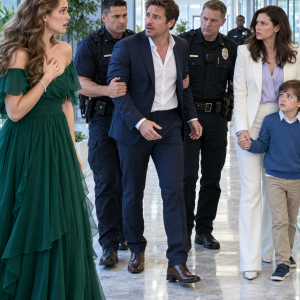
Preston had arrived with Sloane and Judith. He wore the expression he reserved for cameras—confident, generous, and completely rehearsed. Sloane stood beside him in a deep green gown, smiling as though the afternoon had been erased. Judith greeted acquaintances with the composed satisfaction of a woman certain that her family’s position was secure.
Then the program began, and Harrison Reed stepped onto the central platform.
My father was sixty-eight, silver-haired, and so reserved that people often mistook his courtesy for softness. Yet the ballroom quieted before he spoke. He had spent four decades proving that character mattered in business because promises eventually became balance sheets.
Maisie saw him before he saw us.
“Grandpa!”
Her voice carried through the hall.
Preston turned. So did Sloane and Judith.
Maisie slipped her hand from mine and ran toward the platform. My father descended the steps at once and knelt to meet her. She wrapped both arms around his neck, buried her face against his shoulder, and held on.
The room began to murmur.
Preston stared from my father to me, struggling to assemble the truth from pieces he had refused to notice.
Harrison spoke softly to Maisie. “I’m here, sweetheart. Tell me what happened.”
She lifted her head and pointed toward Sloane.
“She hurt me, Grandpa. Daddy saw, but he didn’t help.”