The General They Tried to Erase

Chapter One: A Daughter at the Back of the Chapel
The morning we gathered to say goodbye to my father, the October sunlight fell through the tall windows of a military chapel outside Annapolis, Maryland, illuminating the polished wooden pews and the American flag resting over his casket, while I stood near the entrance wondering how a woman who had commanded thousands of soldiers could feel so unwelcome in the very place where she should have been surrounded by family.
My name is Major General Caroline Whitmore, and for twenty-seven years I had served in the United States Army, building a career that demanded discipline, sacrifice, and a willingness to make difficult decisions, yet nothing in those years had prepared me for the quiet humiliation waiting at my father’s farewell.
My stepmother, Meredith Ashford, approached before I could reach the front pew, her silver-blonde hair arranged perfectly beneath a small black hat and her expression carrying the practiced concern she displayed whenever important people were watching.
“Caroline, I really wish you’d considered wearing something less conspicuous,” she whispered, glancing at my dress uniform. “This is a family gathering, not an opportunity to remind everyone of your accomplishments.”
I looked at her for a moment, remembering how my father had once helped straighten the collar of my first uniform and told me that service was never something to apologize for, but I simply nodded and continued toward the chapel.
Her son, Bradley, intercepted me beside the second row.
“Mother’s being polite,” he said, lowering his voice. “You haven’t been part of this family for years, Caroline. Don’t start pretending otherwise now.”
Bradley was thirty-four, a successful commercial property developer whose business opportunities had always seemed to arrive through my father’s connections, and although we had shared a home during our teenage years, he had never considered me anything more than an inconvenient reminder of my father’s first marriage.
“I’m here for Dad,” I answered.
“Then pay your respects and leave. We’ve arranged a private reception afterward, and frankly, your presence would make things uncomfortable.”
I wanted to tell him that the man resting beneath that flag had taught me to ride a bicycle, helped me memorize the oath I would eventually take as an officer, and written letters to me during deployments when telephone calls were impossible, but I understood that no explanation would make Bradley acknowledge a relationship he had spent years trying to diminish.
Instead, I took a seat near the back.
The ceremony was beautiful in the formal, restrained way military farewells often are, with measured footsteps, familiar hymns, and carefully chosen words about duty and character, although I found myself listening less to the speeches than to the memories that surfaced whenever I looked toward my father’s photograph.
When the final prayer ended, an elderly colonel stepped into the center aisle.
Colonel Nathaniel Brooks had served beside my father for more than three decades, and I recognized him immediately, despite the silver hair and slower movements that had replaced the energetic officer I remembered from childhood.
His voice filled the chapel.
“Ladies and gentlemen, Major General Caroline Whitmore.”
The uniformed officers turned toward me, and those who were seated rose to attention, their movements so immediate and respectful that conversations stopped throughout the chapel.
Meredith stared at me as though she were seeing a stranger.
Bradley looked toward the floor.
Colonel Brooks approached and placed a sealed envelope in my hands.
“Your father asked me to give you this personally,” he said. “He told me that when the time came, you’d understand why he couldn’t explain everything himself.”
I recognized my father’s handwriting across the front.
For the first time that morning, I felt something other than grief.
Chapter Two: The Things a Family Leaves Unsaid
That evening, in a quiet hotel room overlooking the Chesapeake Bay, I placed the envelope on the desk and sat beside the window, allowing memories I had spent years dismissing to return with an uncomfortable clarity.
I remembered coming home for Thanksgiving at nineteen, exhausted from training and eager to spend a few peaceful days with my father, only to discover that Meredith had arranged a holiday dinner with influential friends and had apparently forgotten I would be arriving.
A small container of leftovers waited in the refrigerator beside a note telling me to help myself.
At the time, I had convinced myself that it was an innocent oversight, because admitting otherwise would have meant accepting that my presence in our home was becoming something to be managed rather than celebrated.
There had been other moments, too, including the birthday when I sent my father a beautifully restored compass from an antique shop in England, only to find it years later in a cardboard box because Bradley considered it unsuitable for the renovated study.
Meredith had always presented these exclusions as thoughtful decisions made for my comfort, insisting that formal dinners would bore me or that family vacations conflicted with my demanding schedule, and my father, whose professional life required him to confront difficult situations every day, had somehow allowed the distance between us to grow.
During our last video conversation, however, he had seemed unusually troubled.
“Carrie, there’s something happening around me that I should have addressed a long time ago,” he had said, looking toward the doorway. “I’ve trusted people who didn’t deserve it.”
Before I could ask what he meant, Meredith entered the room and announced that guests were waiting.
The conversation ended without explanation.
Now, sitting alone with his envelope, I wondered whether he had been speaking about our family or something far more serious.
Inside, I found a small encrypted storage card and a folded note containing a name and an address in western Pennsylvania.
Find Oliver.
Nothing else.
My father had always believed that the simplest instructions were often the most important, and although I had no idea who Oliver might be, I knew he would never have left such a message without a reason.
The following morning, I drove north.
Chapter Three: A Cabin Beyond the Mountain Road
The address led me into the wooded hills near Bedford, Pennsylvania, where narrow roads wound between old farms and quiet valleys, eventually ending at a modest cabin surrounded by towering maple trees.
The property appeared ordinary until I noticed the security cameras beneath the porch roof and the carefully concealed communication equipment near a detached workshop.
Before I reached the front steps, the door opened.
A thin man in his late fifties stood watching me with the guarded expression of someone who had spent years expecting unwelcome visitors.
“Can I help you?” he asked.
“I’m looking for Oliver Bennett. My father was General Richard Whitmore.”
The man’s expression changed immediately.
“Richard sent you?”
I handed him the note.
He studied the handwriting for several seconds before stepping aside.
“You’d better come in.”
Inside, the cabin was filled with computers, monitors, and shelves of technical equipment, although photographs of mountains and family gatherings suggested that Oliver had once enjoyed a considerably more ordinary life.
He explained that he had worked as a civilian cybersecurity specialist supporting federal defense investigations, and that my father had approached him months earlier after discovering irregularities involving classified procurement contracts.
“Richard believed someone was redirecting government equipment through private companies,” Oliver said. “He started asking questions, and suddenly people who’d worked with him for decades stopped returning his calls.”
He inserted the storage card into a secure computer and began examining its contents.
Related Posts
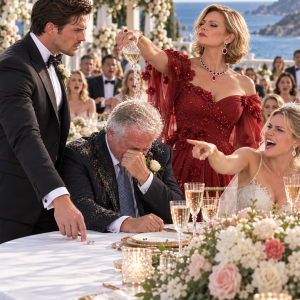
“LOOK AT THAT SHABBY OLD MAN! DID HE REALLY THINK A FANCY SUIT WOULD MAKE US FORGET HE FIXES ELEVATORS FOR A LIVING?” My Future Mother-in-Law Mocked My Father Into the Microphone Before 500 Wedding Guests. My Fiancée Laughed and Snapped, “Ethan, Sit Down! Stop Embarrassing Us!” I Quietly Removed My Wedding Ring, Took My Father’s Hand, and Walked Out. That Night, Her Father Called and Threatened to Mess With My Business. I Let Him Finish Before Asking One Question About $17 Million. He Suddenly Begged Me Not to Hang Up. But I’d Already Opened the Blue Folder.
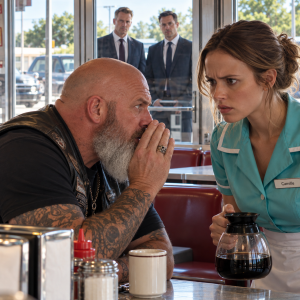
“You’re in Trouble. Pretend I’m Your Father,” a 52-Year-Old Biker Whispered to a Terrified 25-Year-Old Cashier as Two Men in Expensive Suits Watched Her Inside an Ohio Grocery Store. He Thought He Was Simply Protecting a Stranger — Until She Showed Him a Secret Folder Her Father Had Left Behind Before Dying in a Warehouse Fire. Inside Was Evidence of a $200 Million Scheme and a Name He Had Spent 34 Years Trying to Find. What He Discovered Next Changed Everything He Believed About His Sister’s Disappearance…

Just 12 Hours After I Donated 60% of My Liver to Save My Sister’s 10-Year-Old Son, She Sat on My Husband’s Lap and Kissed Him Right Beside My Hospital Bed. “He’s My Son’s Real Father,” She Smirked, While My Mother Calmly Took Her Side. Then My Husband Handed Me Divorce Papers and a $5,000 Check, Telling Me to Leave My Own Home. They Thought I Was Too Weak to Fight Back—Until the Chief Surgeon Walked In Holding a Medical Report and Said, “Before You Sign Those Divorce Papers, You Need to See What We Found.” My Husband Turned Pale When He Read Page Three—and My Sister Suddenly Begged the Doctor Not to Say Another Word…